Home Blog

B.ED Course Syllabus | Scheme of Exam 2 years Prog.

2

Introduction to 2 Years B.ED Course Syllabus

Beginning the path of a B.Ed 2 years course is an important milestone toward becoming an educator. This article aims to give a thorough description of the syllabus, which has many topics to help future teachers become skilled and educated.

In this article, we have shared the complete details of the 2-year B.ED Course Syllabus Approved by NCTE (India). Let’s Talk about common subjects first.

bed course syllabus | Childhood-_-growing-up

 1. Childhood and Growing Up – 100 Marks

It is essential to comprehend the nature of childhood and the sequential change that has a specific effect on how individuals find out about learning. The B.Ed course syllabus covers psychological and sociological aspects of development, ensuring teachers understand their students’ maturity stages.

  • UNIT 1 – Development of Child at Different Stages (Childhood and Adolescence)
  • UNIT 2 – Understanding Individual Difference
  • UNIT 3 – Theoretical Perspectives to Enhance Learning among Children and Adolescents
  • UNIT 4 – Deprivation and Deprived Children: Measures for their Adjustment and Education

ASSIGNMENTS – Any 1 of the following

 Intelligence Test
 Personality Test
 Self-Concept Questionnaire/ Inventory
 Creativity
 Learning Style Inventory
 Parenting Style Inventory
 Interest Test
 Teaching Attitude

b.ed course syllabus | Contemporary-India-and-Education

 2. Contemporary India and Education – 100 Marks
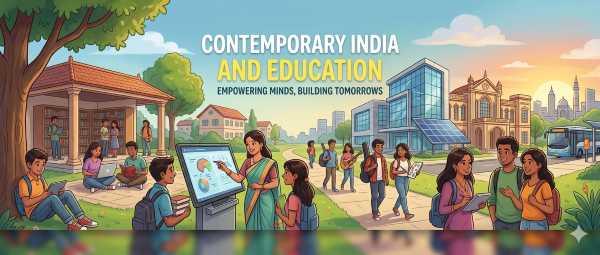
The link between education in India today and the contemporary world needs little emphasis; for indeed, the latter grows by leaps and bounds. The B.Ed course syllabus curriculum addresses this by incorporating subjects that cover the sociocultural, economic, and political forces determining education.

  • UNIT 1 – Constitution of India and Education
  • UNIT 2 – Review of Education Commissions and Policies in India:
  • UNIT 3 – Contemporary Issues in Indian Education
  • UNIT 4 – Emerging Concerns of Indian Society and Education

ASSIGNMENTS – Any 1 of the following

 Project on conflicts and social movements in India.
 Role of media in democracy.
 Impact of electronic media on children.
 Challenges of pluralistic education in the contexts of conflict.
 Any other task/assignment given by the institution.

b.ed course syllabus | Learning-_-Teaching

3.  Learning and Teaching – 100 Marks

Two factors lie at the core of the B.Ed curriculum: one is learning and teaching techniques, which when applied thoughtfully to any subject can express it in a particular form. Modules in this portion are concerned with progressive learning methods to ensure that future teachers will be able to employ creative instructional strategies.

  • UNIT 1 – Teaching: Concept, Nature, Importance of Teaching and Phases of Teaching – Pre-active, Inter-active and Post-active
  • UNIT -2 Models of Teaching, Strategies of Teaching,
  • UNIT 3 – Learning: Concept, Importance, Types and Factors Affecting Learning
  • UNIT 4 – Evaluation in Teaching – Learning Process: Concept, Need and Characteristics of

ASSIGNMENTS – Any 1 of the following

 Draft a report on Teachers’ Teaching Style by one-week Classroom observation of two
teachers.
 A Survey-based report on effective Teacher behaviors or classroom Instruction
Strategies of Effective Teachers.
 Study a case and prepare a report on influential factors of learning.
 Any other task/assignment given by the institution.

b.ed course syllabus | Knowledge-and-Curriculum

4.  Knowledge and Curriculum – 100 Marks

Among the crucial aspects of the B.ED course syllabus is a dynamic relationship between knowledge and curriculum. These subjects shed light on curriculum design, which enables educators to come up with engaging learning environments.

  • UNIT 1 – Knowledge: Key Concepts, Information and Knowledge, Belief and truth, Reasoning and Analysis
  • UNIT 2 – Different facets of knowledge and relationship, Culture and Knowledge, Epistemology of Indian Philosophies, Epistemology of Western Philosophies
  • UNIT 3 – Conceptual Framework of Curriculum, Different Approaches to Curriculum Theory, Curriculum Process, and Different Ways of Approaching Curriculum Theory.
  • UNIT 4 – Curriculum Design Models – Discipline-Centered Design, Learner-Centered Design & Problem-Centered Design, Curriculum Change: Meaning, Need, and Factors Affecting Curriculum Change

ASSIGNMENTS – Any 1 of the following

 (Indian/ Western) Philosophy’s branch of Epistemology
 Evaluation of curriculum of 9th or 10th standard and submission of report
 Any other project given by the institution.

b.ed course syllabus | Assessment-for-Learning

5.  Assessment for Learning – 100 Marks

To determine the progress of students, a good assessment is needed. In the B.Ed course syllabus, a variety of assessment methods are included to make it easier for future educators to adjust their type of evaluation according to individual student needs.

  • UNIT 1 – Assessment, Measurement, Evaluation, and Revised Taxonomy
  • UNIT 2 – Tools and Techniques
  • UNIT 3 – New Trends and Issues in Assessment
  • UNIT 4 – Statistical Methods and Interpretation of Scores

ASSIGNMENTS – Any 1 of the following

 Project on Online Exam and On Demand Exam.
 Preparation of Diagnostic Test.
 Preparation of Achievement Test and Its Analysis.
 Preparation of Question Bank.
 Preparation of Cumulative Record of One Student during Teaching Practice.
 Any Assignment provided by the institution.

b.ed course syllabus | creating-an-inclusive-school

6.  Creating an Inclusive School – 100 Marks

The concept of inclusivity is at the core of modern education. B.Ed syllabus covers this by incorporating subjects that enable teachers to provide an environment in which every student feels welcome and appreciated.

  • UNIT 1 – Concept of Exceptionality and Children with Special Needs
  • UNIT 2 – Legal and Policy Perspectives, Role of Organizations for Education of Children with Disabilities
  • UNIT 3 – Special Needs & Inclusion
  • UNIT 4 – Practices and Support System for Inclusive Set-up

ASSIGNMENTS – Any 1 of the following

 Prepare a Report on school readiness for addressing Children with special needs.
 Record Keeping & Maintenance of Education of Children with Special Needs
 Any other project given by the institution

7.  Language Across the Curriculum – 50 Marks

One of the most important elements that define the educational process today is language. Learners of B.Ed look into how language finds connections with various subjects and are, thereby, ready to improve language competence throughout the curriculum.

  • UNIT 1 – Introduction to Language across the Curriculum Approach, Language Acquisition and Language Learning, Language Discourse in the Classroom
  • UNIT 2 – Listening and Speaking as Essential Communicative Skills, Reading to Learn and Understand, Writing to Learn and Understand

ASSIGNMENTS – Any 1 of the following

 Prepare a report on any one of the following-
 Write a Book review considering the following points-
 Use of different registers of Language
 Technical Aspects of Language
 The meaning conveyed in the Text
 Design a Newsletter based on Academic & Co-curricular Activities held in your
College.
 Any other project given by the institution

b.ed course syllabus | Understanding-Disciplines

 8. Understanding Disciplines and Subjects – 50 Marks

A deeper understanding of disciplines and subjects is fundamental for good teaching. The B.Ed students are taught about such a surplus of knowledge that they can teach the subject’s dynamics to any group of any age and from any part of the world where there is a need for educating adults or children.

  • UNIT 1 – The Doctrine of Disciplinarity, Paradigm shifts like Disciplines
  • UNIT 2 – Education as Interdisciplinary Knowledge, Theoretical Perspective of Education, Support System of Education

ASSIGNMENTS – Any 1 of the following

 Critical analysis of a curriculum/syllabus of a particular school subject
 Evaluate a textbook of secondary class concerning its adequacy and in achieving expected learning outcome

9.  Gender, School & Society – 50 Marks

The intersectionality of gender, schools, and society is a crucial topic in the B.Ed syllabus. Future educators examine the role of gender in education, fostering a more inclusive and equitable learning environment.

  • UNIT 1 Gender Issues
  • UNIT 2 – Understanding the nature and processes of socialization

ASSIGNMENTS – Any 1 of the following

 Field visits to schools, to observe the schooling processes from a gender perspective
 Collection of folk lore reflecting the socialization process.
 Any other project given by the institution

b.ed course syllabus | Health_-Physical-and-Yoga

10.  Health, Physical and Yoga Education – 50 Marks

Recognizing the importance of holistic development, the B.Ed syllabus includes subjects on health, physical education, and yoga. Educators are equipped to promote overall well-being among students.

  • UNIT 1 – Health Education, Physical Education, Posture
  • UNIT 2 – Communicable Diseases, Yoga Education, Yogic Diet

ASSIGNMENTS – Any 1 of the following

 Any two postural deformities and their management
 Any five Asanas and their effects on the Human Body.
 Any other project/assignment given by the institution

11.  Guidance and Counselling – 50 Marks

Guidance and counseling are integral components of the B.ED syllabus. Educators explore techniques to provide support and mentorship, ensuring the holistic development of their students.

  • UNIT 1 – Introduction to Guidance, Studying and Appraising an Individual, Guidance Services
  • UNIT 2 – Introduction to Counseling, The Counselor as a Person

ASSIGNMENTS – Any 1 of the following

 Characteristics/ Qualities of Counselor
 Counselor’s Professional Ethics
 Functions of Counselor

Other than your Common subjects there will be 2 More Teaching subjects based on your past qualifications (Graduation OR Post Graduation) basis. Details of teaching subjects are mentioned below :

•           Pedagogy of English / Hindi / Sanskrit / Urdu

•           Pedagogy of Mathematics

•           Pedagogy of Social Sciences

•           Pedagogy of Natural Sciences

•           Pedagogy of Physical Sciences

•           Pedagogy of Computer Sciences

•           Pedagogy of Home Sciences

•           Pedagogy of Commerce

•           Pedagogy of Economics

•           Pedagogy of Music / Fine Arts

B.Ed Practical Files

There are 4 practical files in B.Ed 1st Year.

  • Drama & Art in Education
  • Reading & Reflecting On Text
  • Critical Understanding of ICT
  • Understanding the Self

In conclusion, the B.ED 2 years course syllabus is a well-crafted journey that prepares educators for the dynamic and challenging field of teaching. Covering a diverse range of subjects ensures that future educators are equipped with the knowledge and skills needed to create engaging and inclusive learning environments.


MDU B.ED Admission 2025 Guide : Unlock Your Teaching Journey

0

Understanding MDU B.ED Admission 2025 Process

Are you planning to become a Government Teacher in 2025? The MDU B.ED Admission 2025 is a golden opportunity to embark on a fulfilling teaching career journey. In this article, I will guide you through the various aspects of MDU B.ED Admission, covering eligibility criteria, application procedures, entrance exams, merit lists, counselling, fees, campus facilities, and much more.

What is the Full Form of B.ED?

B.ED, which is widely known as Bachelor of Education, is an undergraduate degree program granted to individuals who have completed a two-year Bachelor’s Degree in Education from any NCTE Recognized institute/College.

B.ED Course Duration

The B.ED Course Duration is two years in all universities across India and is classified as an undergraduate (UG) level course. Various universities and institutions are currently accepting applications for the 2025-26 academic session. To be eligible, students must have completed a bachelor’s degree from a UGC-approved university with a minimum of 50% marks.

MDU B.ED Admission 2024

MDU B.ED Admission 2024

B.ED Course Eligibility Criteria

Aspiring educators seeking admission to the Bachelor of Education (B.ED) program must first ensure they meet the specified eligibility criteria. To aid in a seamless application process, we have outlined the crucial factors that prospective students should take into account prior to submitting their application.

Educational Qualifications

Candidates seeking admission to MDU B.ED Admission 2025 must hold a bachelor’s degree in a relevant field from a recognized institution with a minimum of 50% Marks.

Age Criteria

There is no age limit mentioned in the B.ED prospectus of Maharshi Dayanand University, Rohtak, but at the time of filling out the form, we have seen that the maximum age we can select is 50 years. It means there is no age limit to study for a Bachelor Of Education. Still, yes, there is an age limit in government jobs for TGT & PGT from 35 years to 40 Years as per different states’ Eligibility Criteria.

Reservation Policies Criteria

There are 85% of seats reserved for Haryana domicile Students in 1st round and 15% for other students, but MDU converted all vacant seats to all India quota in 2nd & round & 3rd rounds.

Application Form Procedure for B.ED Admission

The application process for MDU B.ED Admission 2025 is online. Applicants can follow these simple steps to complete the online application.

Online Application Steps

The online application involves filling out personal and academic details. A step-by-step guide ensures that candidates provide accurate information, reducing the chances of errors.

 Document Submission

Student Needs to submit the original documents, scanned copy of their 10th mark sheet & Certificate, 12th mark sheet, Graduation mark sheet front  & Backside, Post Graduation (if any) mark sheet front  & Backside, Aadhar Card Copy, 1 Recent Passport Size copy, Thumb impression of Left Hand at the time filling online application Form. Just remember to Resize your images as per the size mentioned in the link.

b.ed from mdu

b.ed from mdu

Application Fee Details

There is a Counselling fee in all universities to submit the B.ED Application form in all three rounds. Like if we talk about MDU B.ED Admission 2025, there is Rs. 1000 For the general category & Rs. 650 for the Reserved category in 1st round of counselling. If we go further for the 2nd and 3rd rounds, it is Rs. 2000 & 3000, respectively.

B.ED  Entrance Exam

As we all know, there is an Entrance Exam in DU, IP University, UP B.ED & Bihar B.ED, but there is no Entrance Exam in MDU B.ED Admission. There is direct Admission on a merit basis; Candidates are shortlisted through the Merit List after online counselling is over in every round.

 Merit List Publication

Once the Counselling Process (Online form filling) is completed, MDU publishes a merit list. The counselling process follows, including seat allotment based on the candidate’s rank and reservation preferences like Haryana domicile or All India Category. The merit list showcases the top-ranked candidates, providing transparency in the selection process.

Seat Allotment

The final step is seat allotment, where successful candidates secure their place in an NCTE-recognised college allotted by Maharishi Dayanand University. This is the beginning of their academic journey at MDU.

Offline Counselling Process

MDU B.ED Admission 2025 final counselling process is a Formality where candidates interact with their concerned B.ED college allotted in Merit and submit their Xerox Copies of all documents duly self-attested along with the Admission Fee (1st instalment) on or before the Due Date.

B.ED Course Fees in MDU

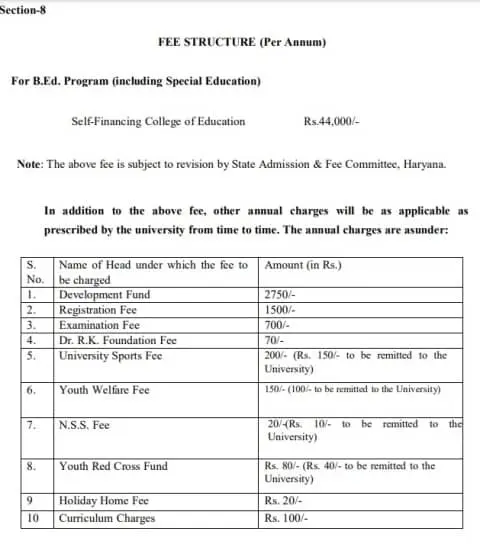
The fee for Self Finance Colleges across Jhajjar & Rohtak District unde MDU is Rs. 44,000 plus 5450 other Charges Annually.

The fee structure is designed to be transparent, allowing candidates to plan their finances accordingly. Officially you can pay a total of 2 years’ fees in 4 instalments, but it may vary from college to college, so kindly coordinate with your concerned college or Admission Center where you have been admitted. 

Payment Options

MDU offers various payment options, making it convenient for students to pay their fees. Cash payment, Demand Draft, Online UPI  transactions, and bank transfers are standard methods.

Scholarship Opportunities

Scholarships and financial aid options are also available for Haryana Domicile students, but Bihar State Candidates can also Avail of Scholarships from Bihar Govt Scholarship Schemes Announced from time to time.

Accommodation Options :

For out-of-town students, MDU does not offer accommodation options on or near the campus as you have not been admitted to the University Campus; you have enrolled in a College under MDU situated in different broad Areas of Rohtak & Jhajjar. So if there is an offline Class, then you need to select the PG option near your college only, but if there is an online class available through the college, then there is no need to search for a place to stay. You can take the class from your home town only.

Library and Labs :

MDU’s well-equipped library and laboratories offer resources and tools necessary for comprehensive learning. Students have access to a vast collection of books, journals, and research materials.

B.ED Course Syllabus

In the first year, there are 3 Common Subjects & 2 specialization subjects offered by all colleges & universities under NCTE guidelines.

First three common subjects are :

  1. Learning & Teaching
  2. Childhood & Growing Up
  3. Contemporary India

Teaching Subjects for Specialization are :

  •  B.ED in Social Science (History, Geography, Social, Political, Psychology)
  •  B.ED  in Physical Science (Physics & Chemistry)
  •  B.ED in Sanskrit
  •  B.ED in Punjabi
  •  B.ED in Economics
  •  B.ED in Commerce
  •  B.ED in English
  •  B.ED in Special Education
  •  B.ED in Computer Science
  •  B.ED in Hindi
  •  B.ED in Mathematics
  •  B Ed in Home Science
  •  B.ED in Biology
  •  B.ED in Music
  •  B.ED in Urdu

Scope Of B.ED

Previously, in India, there was neither growth nor good income for teaching professionals, but nowadays, teaching is a reputed profession with good income sources. There are many ways you can earn your livelihood after completing your bachelor’s degree in education. Along with your school job, private tuition is an excellent source of extra income that can provide you with a higher standard of living. A list of Few Profiles is shared below for your further update :

  • Principal
  • Tutor
  • Coaching Center
  • Academic Counsellor
  • Educational Researcher
  • Consultant

Cambridge institute

Cambridge institute

How Cambridge Group Helps you to get Admission in MDU B.ED admission 2025

You can Contact us via our website, social media platforms, WhatsApp, or contact numbers shared on our website to assist you with your MDU B.ED Admission 2025. Once you get in touch using any of the mentioned methods, one of our experienced advisors will contact you to resolve any query you may have about the upcoming session admission process.

Our team will gather all the information required for admission in B.ED from MDU and then help you collect all the required documents and fill out your form. From filling out an online form to getting confirmed admission and classes to providing you with a mark sheet & Degree, we will provide you direct support and will work as a bridge between a student and the college.

We have multiple Government universities under our counselling domain, so we’ll be able to recommend the most suitable university and program for your needs. So fill out the inquiry form & our advisors will call you, or you can directly call our helpline numbers to get admission in the B.ED 2025 session.

FAQs

Can we do B.ED after 12th

No, typically, you cannot pursue B.Ed (Bachelor of Education) directly after completing the 12th grade. B.Ed is a postgraduate program, and eligibility usually requires candidates to have completed a bachelor’s degree in any discipline. After obtaining a bachelor’s degree, individuals can then apply for and pursue a B.Ed program to become a qualified teacher.

How Many Year of B.ED Course

The duration of a B.ED (Bachelor of Education) course is typically two years. However, the duration may vary based on the education system and the specific regulations of the university or educational institution offering the B.ED program.

when B.ED will be of 1 year

Never, As far as last update is concerned in New Education Policy, B.ED duration in future will increase from 2 years prog to 4 years prog till 2030.

Is B.ED compulsory for CTET (Central Teacher Eligibility Test)

While B.Ed is not compulsory for CTET, having a B.Ed degree can be beneficial as it enhances your understanding of teaching methodologies and educational concepts. CTET is an eligibility test for teaching positions, and candidates with or without B.Ed can appear for it, depending on the specific requirements outlined by the recruiting authority.

is b.ed a professional course

Yes, B.Ed (Bachelor of Education) is considered a professional course. It is specifically designed to prepare individuals for a career in teaching and education. The program focuses on equipping students with the necessary skills, knowledge, and pedagogical techniques required to become effective educators.

What is EPC in B.ED

EPC stands for Enhancing Professional Capacities, in B.ED the term “EPC” could refer to some special training module designed by a particular university, educational institution, or a localized program.

B.ED Course Details in Hindi

0

बी.एड कोर्स की विस्तृत जानकारी हिंदी

बी.एड (बैचलर ऑफ एजुकेशन) भारत में स्कूलों में शिक्षक बनने के लिए एक व्यावसायिक डिग्री पाठ्यक्रम है। बी.एड एक स्नातकोत्तर डिग्री है जो आमतौर पर दो साल की अवधि के लिए चलती है। इस पाठ्यक्रम को करने के लिए स्नातक डिग्री आवश्यक है।

बी.एड पाठ्यक्रम का उद्देश्य भावी शिक्षकों को शिक्षण कौशल, विषय-वस्तु की जानकारी और शिक्षाशास्त्र सिखाना है। इस पाठ्यक्रम में शिक्षक शिक्षा, बाल मनोविज्ञान, शिक्षण विधियाँ, शैक्षणिक प्रौद्योगिकी और स्कूल प्रबंधन जैसे विषय शामिल होते हैं।

B.ed full form in Hindi

The full form of B.Ed in Hindi is “शिक्षा में स्नातक” (Bachelor of Education).

बी.एड पाठ्यक्रम की मुख्य विशेषताएँ:

– अवधि: बी.एड आमतौर पर दो साल का पूर्णकालिक पाठ्यक्रम है। कुछ संस्थान एक साल का पाठ्यक्रम भी प्रदान करते हैं।

– पाठ्यक्रम सामग्री: बी.एड पाठ्यक्रम में शिक्षण कौशल, पाठ्य विषयों की जानकारी, शिक्षाशास्त्र, बाल मनोविज्ञान और स्कूल प्रबंधन जैसे विषय शामिल होते हैं।

– इंटर्नशिप: पाठ्यक्रम के दौरान छात्रों को स्कूलों में इंटर्नशिप करना अनिवार्य होता है ताकि उन्हें वास्तविक कक्षा अनुभव मिल सके।

– परीक्षा पैटर्न: बी.एड परीक्षा में थ्योरी और व्यावहारिक दोनों पर ध्यान दिया जाता है। लिखित परीक्षा, प्रयोगात्मक कार्य और इंटर्नशिप के आधार पर मूल्यांकन किया जाता है।

– योग्यता: बी.एड को करने के लिए किसी भी विषय में स्नातक डिग्री आवश्यक है।


बी.एड पाठ्यक्रम प्रदान करने वाले कुछ प्रमुख विश्वविद्यालय

हरियाणा


      • चौधरी रणबीर सिंह विश्वविद्यालय, जींद

      • कुरुक्षेत्र विश्वविद्यालय, कुरुक्षेत्र

      • महाऋषि दयानंद यूनिवर्सिटी, रोहतक

      • दीनबंधू छोटू राम विश्वविद्यालय, मुरथल

      • गुरुग्राम विश्वविद्यालय, गुरुग्राम

      • चौधरी भीमसिंह विश्वविद्यालय, भिवानी

    दिल्ली


        • जामिया मिल्लिया इस्लामिया, नई दिल्ली

        • इंदिरा गांधी राष्ट्रीय मुक्त विश्वविद्यालय, नई दिल्ली

        • गुरु गोबिंद सिंह इंद्रप्रस्थ विश्वविद्यालय, दिल्ली

        • दिल्ली विश्वविद्यालय, नई दिल्ली

      बिहार


          • ललित नारायण मिथिला विश्वविद्यालय, दरभंगा

          • पटना विश्वविद्यालय, पटना

          • मगध विश्वविद्यालय, बोधगया

        उत्तर प्रदेश


            • बनारस हिंदू विश्वविद्यालय, वाराणसी

            • इलाहाबाद विश्वविद्यालय, प्रयागराज

            • लखनऊ विश्वविद्यालय, लखनऊ

          b.ed admission 2024


          bed admission in delhi

          बी.एड पाठ्यक्रम का पाठ्यक्रम विवरण और शुल्क:

          बी.एड का पाठ्यक्रम आमतौर पर निम्न विषयों पर आधारित होता है:


              • – शिक्षा के दार्शनिक और समाजशास्त्रीय आधार

              • – बाल मनोविज्ञान और विकास

              • – शिक्षण कौशल और शिक्षण विधियाँ

              • – पाठ्यपुस्तक विश्लेषण और पाठ्यक्रम निर्माण

              • – भाषा शिक्षण विधियाँ

              • – गणित शिक्षण विधियाँ

              • – विज्ञान शिक्षण विधियाँ

              • – सामाजिक विज्ञान शिक्षण विधियाँ

              • – शिक्षा में आईसीटी का उपयोग

              • – शिक्षण अभ्यास

              • – स्कूल प्रशासन और प्रबंधन

            बी.एड के लिए शुल्क संरचना निम्न है:


                1. पंजीकरण शुल्क: 500 से 2000 रुपये

                1. – सेमेस्टर शुल्क: प्रति सेमेस्टर 20000 से 35000 रुपये

                1. – परीक्षा शुल्क: 1000 से 2000 रु

                1. – पुस्तकालय शुल्क, मैगज़ीन शुल्क आदि

                1. – कुल शुल्क: लगभग 80,000 से 1.5 लाख रु तक

              बी.एड करने का कुल खर्च शुल्क के अलावा रहने, यात्रा और अन्य खर्चों पर भी निर्भर करता है। विभिन्न कॉलेजों में शुल्क में अंतर हो सकता है। बी.एड एक अच्छा पेशेवर पाठ्यक्रम है जो शिक्षक बनने के लिए तैयार करता है।

              बी.एड के बाद करियर के अवसर:


                  • स्कूल में शिक्षक के रूप में काम करना

                  • – प्राइवेट ट्यूशन लेना

                  • – शिक्षा संबंधी NGOs में काम करना

                  • – शैक्षणिक परामर्शदाता बनना

                  • – प्रशिक्षक के रूप में कार्य करना

                  • – शिक्षा-संबंधी स्टार्टअप शुरू करना

                  • – शोध कार्य करना और शिक्षा क्षेत्र में योगदान करना

                बी.एड एक बहुत ही ज़रूरी पाठ्यक्रम है जो गुणवत्तापूर्ण शिक्षा प्रदान करने के लिए भावी शिक्षकों को तैयार करता है। यह पाठ्यक्रम शिक्षक बनने के इच्छुक लोगों को शिक्षण कौशल, ज्ञान और दृष्टिकोण विकसित करने में मदद करता है। बी.एड एक चुनौतीपूर्ण लेकिन रोचक अनुभव होता है जो शिक्षकों को उनके करियर के लिए अच्छी तरह से तैयार करता है।

                हरियाणा बी.एड के बारे मैं अधिक जानकारी या एडमिशन के लिए आप हमारी हेल्पलाइन पे कॉल कर सकते हैं या इन्क्वायरी फॉर्म भरे और हमारी टीम आपको संपर्क कर लेगी.


                Cambridge institute


                Cambridge institute

                B.Ed Course Eligibility: A Comprehensive Guide

                1

                Introduction

                In the dynamic landscape of education, pursuing a Bachelor of Education (B.Ed) course is a pivotal step toward a rewarding career in teaching. The journey to becoming an educator begins with understanding the eligibility criteria for enrolling in a B.Ed program. In this comprehensive guide, we will delve into the nuanced aspects of B.Ed course eligibility, providing you with a roadmap to embark on this educational voyage.

                B.Ed Course Eligibility haryana
                B.Ed Course Eligibility haryana

                Understanding B.Ed Course

                Before we explore the eligibility requirements, let’s briefly highlight what a B.Ed course entails. A Bachelor of Education program is designed to equip aspiring teachers with the necessary skills, knowledge, and pedagogical techniques to excel in the field of education. From foundational teaching methodologies to in-depth subject expertise, a B.Ed course forms the bedrock for a successful teaching career.

                Academic Qualifications : B.Ed course eligibility

                Academic Excellence as a Prerequisite

                To be eligible for a B.Ed course, prospective candidates must possess a strong academic background. Typically, institutions require a minimum of a Bachelor’s degree in any discipline from a recognized university. This criterion ensures that candidates entering the teaching profession have a solid foundation in their chosen field of study.

                Subject-Specific Requirements

                In addition to a general Bachelor’s degree, some institutions may have subject-specific requirements for B.Ed eligibility. For instance, if aspiring educators wish to specialize in teaching mathematics, a prior degree in mathematics or a related field may be necessary. This ensures that educators have the requisite subject knowledge to effectively teach their chosen subjects.

                Entrance Examinations

                Standardized Testing for B.Ed Aspirants

                Many educational institutions administering B.Ed courses may require candidates to undergo entrance examinations. These assessments are designed to evaluate the candidates’ aptitude, subject knowledge, and teaching potential. Scoring well in these exams not only validates B.Ed course eligibility but can also be a competitive edge in securing admission to reputable B.Ed programs.

                • Haryana B.Ed course eligibility :
                • There is no more Entrance Test to get admission in B.ED in Haryana, Direct admission process on Merit basis in all the universities & colleges in All districts. MDU,CRSU, DCRUST, IGU – Rewari, Gurugram Univ, Chaudhary Bansi Lal univ, Kurukshetra University will take admission’s direct on university level through online counseling.
                • Delhi University B.Ed Entrance Exam:
                • Conducted by Delhi University, the B.Ed entrance exam assesses candidates on their aptitude, subject knowledge, and teaching potential.
                  • The examination is a crucial step for admission to the B.Ed program offered by Delhi University, a prestigious institution known for its quality education.
                • UP B.Ed Joint Entrance Exam:
                • The Uttar Pradesh (UP) B.Ed Joint Entrance Exam is a standardized test for B.Ed aspirants in the state of Uttar Pradesh.
                  • It evaluates candidates on various parameters, including general knowledge, teaching aptitude, and subject-specific knowledge.
                  • A competitive performance in this exam is essential for securing admission to B.Ed programs in various universities and colleges across Uttar Pradesh.
                • Bihar B.Ed Common Entrance Test:
                • The Bihar B.Ed Common Entrance Test is the standardized examination for B.Ed aspirants in the state of Bihar.
                  • Candidates undergo rigorous testing to showcase their academic prowess, teaching aptitude, and suitability for the B.Ed program.
                  • Scoring well in this exam opens doors to reputable B.Ed institutions in Bihar.
                • IP University B.Ed Common Entrance Test:
                • Indraprastha (IP) University conducts a standardized B.Ed Common Entrance Test for aspiring educators.
                  • The examination evaluates candidates on aspects such as general awareness, reasoning ability, and subject knowledge.
                  • IP University is renowned for its quality education, and success in this entrance exam is pivotal for securing admission to its B.Ed program.

                These standardized tests serve as gateways for B.Ed aspirants to gain entry into esteemed institutions, shaping their journey towards becoming proficient educators.

                B.Ed Course Eligibility
                B.Ed Course Eligibility

                Preparing for B.Ed Entrance Exams :

                Aspirants can enhance their chances of success in B.Ed entrance exams through diligent preparation. Accessing study materials, practicing previous years’ question papers, and enrolling in preparatory courses can significantly boost performance, opening doors to prestigious B.Ed programs.

                Eligibility Based on Experience :

                Recognizing Prior Teaching Experience

                In some cases, institutions may consider prior teaching experience as a factor in B.Ed course eligibility. This recognizes the valuable insights and skills that experienced educators bring to the table. Teachers with a commendable track record may find pathways to B.Ed programs that acknowledge and leverage their practical teaching expertise. As far as my knowledge is concerned, neither Delhi & Haryana nor Bihar or U.P. Government has applied this criteria of having teaching Experience for B.Ed course eligibility these days so need not to worry about that.

                Age Criteria

                Age as a Determinant

                While age is not always a strict criterion, some institutions may have age restrictions for B.Ed admissions. It’s essential to check the specific eligibility criteria of the intended B.Ed program, as certain institutions may prefer candidates within a certain age bracket. B.Ed From Haryana dsn’t have any age restrictions to get admission in B.ED.

                B.Ed Course Eligibility
                B.Ed Course Eligibility

                Conclusion :

                Embarking on the journey to become an educator through a B.Ed course requires a clear understanding of the eligibility landscape. Academic qualifications, entrance exams, teaching experience, and age criteria collectively shape the eligibility criteria for B.Ed programs. By navigating these prerequisites, aspiring teachers can unlock the doors to quality education and impactful teaching careers.

                If you want to get admission in those states where Entrance Exam is compulsory, you may visit their official website like delhi university entrance exams | Bihar B.Ed. Common Entrance Test | UP B.Ed. Joint Entrance Examination and many more.

                But if you want Direct Admission in B.ED in Delhi/NCR colleges without entrance exam you may contact our team (fill our inquiry form or send message through whatsapp) and we will guide you and help you to get direct admission in B.ED.

                FAQs

                What is Integrated B.ED

                “Integrated B.Ed” is a 4 years Program refers to a combined or integrated program that allows students to simultaneously pursue a Bachelor’s degree in a specific academic subject along with a Bachelor of Education (B.Ed) degree like BA B.ED & BSC B.ED.

                Can b tech student apply for B.ED

                Yes B.Tech Students can apply for B.ED if they have studied Math or Physics or Computer Science for minimum 2 years in their Graduation Prog.

                can i do b.ed after bba

                Yes you can do B.ED after BBA if u have studied English, or Economics or Business Studies / Commerce or Math as a subject for minimum 2 years in your graduation.

                can i do B.ED after BCA

                Definitely Yes as Computer Science is now added as a Subject in B.ED 2 years prog after 2015.

                how to take admission in B.ED

                To take Admission in any Recognised University or College you prefer, kindly visit their official portal and fill the online form along with your required documents. You can also fill our B.ED inquiry form and our team will help and guide you to take admission in your desired University in Haryana.

                B.ED Admission 2025 in Delhi/NCR | Syllabus, Fee & Online Form

                0

                B.ED Course Details

                The opportunity to enroll in a Bachelor of Education (B.Ed) program in Haryana represents a big career prospect for future teachers. Let’s explore the process of direct B.Ed admissions without entrance tests, especially those colleges recognized by the National Council of Teacher Education (NCTE) in Delhi/NCR in universities like CRSU, KUK, DCRUST, Gurugram University, and MDU for B.ED Admission 2024.  Additionally, we will explore the curriculum and the fee structure of this program offered by Cambridge Education, a reputed academic brand with wide acknowledgment and a network of 47 plus colleges in the Delhi/NCR.

                B.ED Admission 2025 Haryana

                In Haryana, direct Admission to B.ED course is implemented by various renowned Govt.  universities. The procedure avoids entrance Tests into teaching programs and admission will be confirmed without an Entrance Exam, so you have the opportunity to get admission without any hurdle. This is very helpful to those Candidates, who want to join the Govt or Private Schools as a Teacher. Universities such as CRSU, KUK, DCRUST, Gurugram University, and MDU are well known for their educational standards and are Recognized by the NCTE, the courses offered always touch the higher standards as they are already Recognized and are accredited by UGC, NCTE & NAAC.

                B.ED Universities in Delhi / NCR

                B.ED from Haryana

                  1. Chaudhary Ranbir Singh University (CRSU): Located in Jind, CRSU is renowned for its focus on education degrees, offering comprehensive teacher training.
                  2. Kurukshetra University (KUK): With a rich history, KUK provides a diverse range of programs, including a robust B.Ed curriculum.
                  3. Deenbandhu Chhotu Ram University of Science and Technology (DCRUST): Situated in Murthal, DCRUST integrates technological approaches within its teaching courses.
                  4. Gurugram University: Situated in the heart of Gurgaon City and connected to Delhi Metro, it aims to address modern educational needs with innovative teaching methods.
                  5. Maharshi Dayanand University (MDU): MDU in Rohtak has a long-standing reputation for excellence in various academic disciplines, including education.

                  b.ed course details

                  b.ed course details

                  B.ED Admission 2025 – Admission Process

                  Applying for the BEd program is fairly a simple process in Universities in Haryana. Candidates need to fulfill the criteria specified for qualification, which usually means a bachelor’s degree from a recognized university with an aggregate average of at least 50% marks ( B.ED Course Eligibility ). Applicants Must have to submit their academic records and other required documents the college may request. 

                  There are 3 rounds of Counselling in all universities for B.ED Admission 2024. After Registering the Candidate through the online portal by the college, the student gets a Login ID & Password where they can check their uploaded documents and records, and after Allotment they will also get the Allotment Letter with their College Name.

                  B.ED 2025 Curriculum

                  B.Ed program is designed to equip students with the necessary skills and knowledge to excel in the educational field. The curriculum is intelligently structured to cover all essential aspects of teaching and learning. Students undergo theoretical coursework and practical training, preparing them for the diverse challenges of the teaching profession.

                  Curriculum Highlights

                  • Educational Psychology: Understanding the psychological principles essential in teaching and learning.
                  • Pedagogy of Subjects: Specialized methods of teaching subjects such as Science, Mathematics, Social Studies, and Languages.
                  • Educational Evaluation: Techniques and methods of assessing student learning and educational outcomes.
                  • Technology Integration: Using modern technology to enhance teaching and learning processes.
                  • Teaching Practice: Hands-on teaching experiences in real classroom settings to apply theoretical knowledge.

                  B.ED Admission 2025 Fee Structure

                  fee structure for its B.Ed program in all universities priced at INR 48,500 per annum. This fee is comprehensive, covering College fees, University Exam fees,  tuition, library charges, laboratory fees, and administrative costs. It’s designed to be affordable while maintaining the high standards of education. Admission Challan & Practical fees will be charged additionally depending on different colleges’ fee structure.

                  B.ed Admission 2024

                  B.ed Admission 2024

                  B.ED Admission 2025 Syllabus

                  The Bachelor of Education (B.Ed) syllabus is meticulously designed to address the foundational and professional needs of future teachers. It covers a range of subjects that are pivotal for comprehensive teacher education. Here’s a detailed look at some of the key modules included in the B.Ed syllabus:

                  1. Childhood And Growing Up

                  • Psychological development of children from birth to adolescence.
                  • Impact of family, school, and community on childhood development.
                  • Theories of learning and development such as those by Piaget, Vygotsky, and Kohlberg.
                  • Child rights and the legal framework protecting children.

                  2. Contemporary India and Education

                  • Socio-economic and political contexts affecting education in India.
                  • Policies and laws related to education including the Right to Education Act.
                  • Current issues and trends in Indian education.
                  • Role of education in shaping national identity and progressive changes.

                  3. Learning & Teaching

                  • Principles and theories of learning and teaching.
                  • Effective teaching strategies that cater to diverse learning needs.
                  • Role of teachers in facilitating learning in inclusive settings.
                  • Use of technology in supporting teaching and learning processes.

                  4. Pedagogy of School Subjects 1 & 2

                  • Subject-specific teaching methods (candidates usually choose two subjects based on their prior specialization).
                  • Curriculum objectives and structuring for chosen subjects.
                  • Integration of content knowledge with pedagogical skills.
                  • Innovative practices in teaching subject-specific content.

                  5. Knowledge and Curriculum

                  • Philosophical and sociological perspectives of education.
                  • Curriculum development processes include planning, implementation, and evaluation.
                  • Role of teachers in curriculum development.
                  • Analysis of curriculum and textbooks.

                  6. Assessment For Learning

                  • Principles and multiple forms of assessment.
                  • Designing effective assessment strategies to improve student learning.
                  • Interpretation and use of assessment data for enhancing teaching and learning.
                  • Issues and ethics in student assessment.

                  7. Creating an Inclusive School

                  • Strategies for creating an inclusive classroom environment.
                  • Understanding diverse learner needs including disabilities.
                  • Roles of special educators and regular teachers in inclusivity.
                  • Policy framework for inclusive education in India.

                  8. Language Across the Curriculum

                  • Role of language in learning across different subjects.
                  • Techniques for integrating language development in various subject teachings.
                  • Language skills assessments and their importance.
                  • Strategies to support second language learners in the classroom.

                  9. Gender, School & Society

                  • Influence of gender on educational experiences and achievements.
                  • Deconstructing gender biases in educational settings.
                  • Role of education in promoting gender equity.
                  • Analyzing textbooks and other educational materials from a gender perspective.

                  10. Understanding Disciplines and Subjects

                  • Nature and structure of knowledge in different disciplines.
                  • Epistemological and ontological foundations of school subjects.
                  • Interdisciplinary approaches in teaching and learning.
                  • The role of teachers as subject matter experts and pedagogies.

                  This curriculum ensures that B.Ed graduates are well-prepared to enter the teaching profession, and equipped with the knowledge, skills, and attitudes necessary to meet the challenges of contemporary education.

                  How Cambridge Education Helps to get Admission in B.ED

                  Cambridge Education having a comprehensive network of 47 plus colleges in Delhi/NCR, is a standard of support and excellence that is set in teacher education. The excellent institution not only helps the students in their B.ED admission process but also provides a wide range of services to ensure that the student is successful and growing. From the first day to the days of completing the program, Cambridge Education gives professional advice & helps students choose the correct college, complete the online form-filling process & plan their academics. The students are not only provided with logistics but with experiential learning opportunities (e.g. access to books and innovative online classes) which broaden the scope of traditional learning.

                  Cambridge Institute Uttam nagar

                  Cambridge Institute Uttam nagar

                  Cambridge Institute helps students by providing a theoretical vs. classroom experience. Moreover, beyond admission support and continuous assistance with academic pursuits, such services bring forth the college’s commitment to ensure students’ success. 

                  Documents Required for B.ED Admission 2025

                  • 10th mark sheet Scan copy
                  • 12th mark sheet Scan copy
                  • Graduation Marksheets All Semester / Year Front and Back Scan Copy
                  • Aadhar Card Scan Copy
                  • Email ID
                  • 2 Contact Numbers
                  • Passport Size Photograph

                  Want to join B.ED Course in Delhi for 2024 Session? Just fill out the inquiry form and our team of Experts will call you, guide you & Help you through the Complete Process of (filling out the online form and selecting the best & suitable university & College, Providing classes, Books, and practical files, providing Cab facility to College & Exam Center and other assistance till you get your Degree). You can also call us directly on our helpline number or message us on our WhatsApp for Queries related to B.ED from CRSU, B.ED from Gurugram univ, B.ED from MDU, B.ED from KUK, B.Ed from dcrust.

                  What Is Lesson Plan

                  0

                  A lesson plan is a road map, which a teacher produces to show the method of instruction that he/she wants to use for a lesson or a unit. Consequently, the syllabus stipulates specific learning objectives that will be used during the allotted class time via different learning methods such as instruction, activities, and assessment. Lesson planning is a facilitator of lessons that plan and shape these lessons to be structured and engaging for the students.

                  “A lesson plan is a kind of body and way of teaching of a teacher to which he refers while he develops his individual teaching style.” – Melissa Kelly

                  Types of Lesson Plans

                  There are three types of lesson plans according to the learning domains. These are cognitive (knowledge), affective (emotions/attitudes), and psychomotor(skill).

                  1. Knowledge Lesson Plans: They focus on expanding students’ knowledge base in subjects such as history, science, math, etc. Applying predetermined methods like Herbart’s steps.

                  2. Appreciation Lesson Plans: This stresses how students can develop their aesthetic senses and appreciation for arts like music and painting among others. Which seek to arouse feelings.

                  3. Skill Lesson Plans: These deal with the development of students’ psychomotor skills in fields such as art, handicrafts, sports, computer skills, etc., which enhance creative talents.

                  Mega LEsson Plan for B.ED
                  Mega LEsson Plan for B.ED

                  A good lesson plan combines any combination of these three domains depending on the targeted learning outcomes. It serves as a tool for teachers to deliver coherent well-structured instructions that will be interesting to their learners who have different needs

                  It can be stated that an extensive lesson plan is the most important tool for successful teaching. It is a map, which helps educators to understand how to guide students through the educational process. It, as a true multitude of parts, is completely aimed at the established order and the thinking operation.


                  At the beginning of the lesson planning process, the first heading should be exhibited to briefly contain the main information of the topic, the teacher’s name, the subject, and the place where the class is planned to be held. 

                  What follows is the writing of the main objective (the second heading) and the objectives of each specific work (the third heading). The plan involves a set of needed materials, attention-grabbing questions that will be used to get students engaged, and a step that will drive the focus of the lesson.

                  The main body of the lesson plan, which represents the central part of the lesson, is the core content, which is activated by the teacher elaborating on the actual instructional content. This step is closely followed by a concluding remark that encapsulates the main concepts. 

                  what is lesson plan and why it is important
                  what is lesson plan and why it is important

                  To reinforce the knowledge, the recapitulating questions which cover various forms like multiple choice, fill in the blanks, True or false, and also the very short and short answer types are incorporated. Another way to teach through the game is to include homework questions that are created to take the learning process out of the classroom.

                  Benefiting from the combination of frameworks, a lesson plan is a necessary part of the permanent process, which is connected with teaching. Answer 2 explains what it involves, namely the detailed planning of the assimilation process, which includes collecting primary information about students’ level, curriculum material, and duration of the lesson before giving.

                  Defining the Mission and Vision of the Education Program, here Short-Term and Long-Term Goals, and the expected Behavioral Changes in Students are identified. The teaching supports are skillfully designed to determine which media (audio or visual) to use for the content relevance. 

                  Accompanying this essential step is a process of students reviewing their prior knowledge to figure out how to teach accordingly. In the very last, one takes the class home to reinforce the appreciation gained.

                  The main plan is a formal document, it is pleasant because it includes the main elements such as objectives, teaching materials, assessment tools, and the reflective component that provides clear direction and delivers a powerful teaching practice.

                  what is lesson plan in b.ed
                  what is lesson plan in b.ed

                  Main Points to remember while preparing Lesson Plan

                  1. First heading -the basic things like class topic subject your name all these in a box.
                  2. Second heading – general objective and
                  3. third heading -specific objectives
                  4. Material required
                  5. Introductory questions
                  6. Statement of aim
                  7. Main lesson plan where you write the actual content
                  8. Concludatory statement
                  9. Recaptulatory questions – multiple choice questions, fill-in-blanks, true-false, and very short, short answer type questions, and homework questions
                  10. The Last page of the lesson plan must be signed by faculty.

                  Download B.Ed Lesson Plan All Subjects B.ed Course 2nd year file – Sample files – Hindi or English Medium

                  What is a Micro Teaching Lesson Plan?

                  Here is an overview of what a micro-teaching lesson plan is:

                  Microteaching is a teacher training technique where student teachers practice teaching a short lesson to a small group of students. A micro-teaching lesson plan is a condensed lesson plan that focuses on one particular skill or technique.

                  Key features of a micro-teaching lesson plan:

                  • Short duration – Usually 5-10 minutes long. Allows the student teacher to focus on quality over quantity.
                  • Limited content – Covers a very narrow topic or single concept, rather than large portions of content.
                  • Specific skill focus – Zeros in on practicing one particular teaching skill like introducing a lesson, explaining a concept, using a teaching aid, asking productive questions, etc.
                  • Small audience – Delivered to a group of 4-5 fellow student teachers acting as students. Provides a comfortable environment.
                  • Observation and feedback – Supervisor and peers observe and provide feedback to improve the particular skill.
                  • Repeated practice – The student teacher gets to refine the skill by teaching the lesson multiple times.

                  Benefits of micro-teaching lesson plans:

                  • Develop specific teaching skills in a controlled setting
                  • Get experience in structuring concise, focused lesson plans
                  • Learn to teach effectively in short durations
                  • Gain confidence through repeated practice and feedback
                  • Hone skills before actual classroom teaching

                  Overall, micro-teaching lesson plans create an almost real classroom scenario for the focused practice of discrete teaching skills within a limited scope and time. This prepares student teachers well for actual teaching. Want to know More About Micro Teaching Lesson Plan?

                  How to Write Micro Teaching Lesson Plan

                  2

                  Micro Teaching Lesson Plan

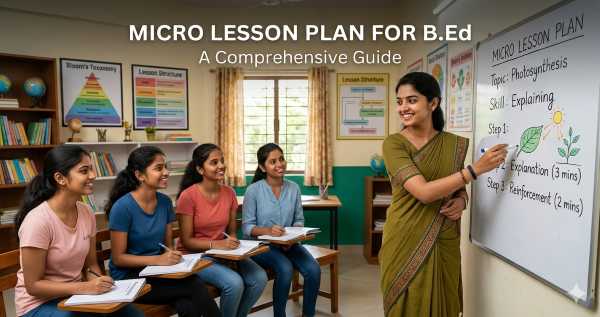
                  Micro Teaching Lesson Plan – A micro lesson plan is a concise and focused series of activities compared to a traditional lesson plan. It typically spans a shorter time frame than that of a normal class, with it being a single class period or part of a single class period. The main objective of the micro lesson plan is to cover something specific, like a general concept or skill shortly and directly. Here is the summary of the key elements and process of micro lesson planning in the b.ed Course.

                  In the Micro Lesson plan, there are 5 skills i.e.

                  1. Skill of introduction

                  2. Skill of Explanation

                  3. Skill of stimulus Variation

                  4. Skill of reinforcement and

                  5. Skill of blackboard Summary.

                  You can start with the index, Then start with the skill of Introduction. For the skill of introduction in the Micro Teaching Lesson Plan, on the very right side, you will write the name of the teacher, subject, and topic. On the left side, you will write the date, class, and duration.

                  The right introduction skill is basically when you introduce the topic to the students and you have to ask a minimum of three questions. And those questions can vary between three to five. You have to get the child to that particular topic or that particular subject of the topic which you will be teaching in the class that day.  

                  If you are teaching nouns, you can ask a few questions related to nouns and make sure that by the end of the third or fifth question, the child gives some answers related to nouns.

                  (I have shared a set of Pictures just for an example of a micro-teaching lesson plan in picture format, you can change the topic according to your teaching subject)

                  Then comes the skill of explanation (Micro Teaching Lesson Plan). The skill of explanation will start with the name of the teacher followed by subject, topic, class, and duration. And then in this skill, what you have to do is you have to explain the topic fully. Whatever you have to explain in the class, you can write down that explanation here in this micro lesson plan.

                  So these micro lesson plans are basically for your help when you go to the class and when you are going to deliver a lecture to the class. So this is a sort of homework which you do, um like a pro on prior hand.

                  Now comes the stimulus variation (Micro Teaching Lesson Plan). Name, subject, topic, date, class, duration. These things will remain the same all right but there is one thing which will add on here is the third column which is of components.

                  The first two columns which were of teacher activity and student activity, it will remain the same the third column will be of components. And in this column, you will tell, which component of stimulus variation the teacher is using. There are various components.

                  For example, the behavior of the teacher, physical involvement of the teacher with the student, interaction with the student, stressing on some part or pausing somewhere or even the gestures which the teacher is making.

                  So, stimulus variation is basically how the teacher interacts and behaves and makes the class involved with her or him is what stimulus variation is.

                  Now we have the skill of reinforcement (Micro Teaching Lesson Plan). Everything will remain the same. Name, date, duration, class, even the subject and topic. These six columns will remain the same. You have to fill it out accordingly.

                  Now you’ll have two columns, one of the teacher activity and the other of the student activity. In this skill, what you have to do is you have to put up questions from the topic or the content that you have taught in the class that particular day.

                  It is basically for the recallment of the topic. In this way, you will even get to know how much the student has got or how much the student has grasped from whatever you have taught.

                  Now we have the blackboard summary (Micro Teaching Lesson Plan). This is nothing. but what you will be writing on the board while teaching whatever you will be writing on the blackboard, you’ll have to put down here in this micro lesson plan.

                  You can write whatever you will be writing on the blackboard according to your topic. You can do is you can even copy the same micro lesson plans down for your assignments and your projects.

                  Download PDF for all Lesson Plan for all subjects–  B.ed 2nd year Lesson Plan file – Sample files – Hindi or English Medium, Select the one you find best for you, and download and copy the content in your file.

                  B.ED Lesson Plan | Sample PDF Download All Subjects

                  1

                  Mega Lesson Plan B.ED | Micro Lesson Plan B.ED

                  What is a Lesson Plan in B.ED

                  A lesson plan in a Bachelor of Education (B.Ed.) course is a detailed outline or framework that teachers use to manage and organize their activities related to the teaching of a single lesson. It directs teachers to fulfill the learning objectives and goals efficiently and effectively. in the B.Ed 2 years Syllabus, writing a lesson plan involves several key components :

                  1. Objective or Learning Outcome: You must ensure that the learning objectives or outcomes you want to achieve during the lesson are well defined. What should students achieve by the end of the lesson? What kind of knowledge or skills are you expecting students to have?

                  2. Introduction: Describe how you will start the lesson with an attention-grabbing technique, and if it will be contextual or not. This may involve a quick outline, hook, or precept from past lessons.

                  3. Materials and Resources: Make a list of the materials, resources, and tools that are needed in the lesson. Include all the reading materials such as textbooks, handouts, visual presentations, and/or any other resource you plan to use in the class.

                  4. Methods and Strategies: Give the chart your lesson plan and ways you will use to teach. These could variously be lectures, group activities, discussions, demonstrations, and other approaches.

                  5. Content Presentation: Structure the content into smaller parts and explain how you are planning to present each segment. Be full of the order of activities and their part in the learning goals.

                  6. Student Activities and Engagement: Explain what tasks/activities students will perform during the lesson. For instance, group work, individual assignments, discussions, or exercises could be done to achieve that.

                  7. Assessment and Evaluation: Indicate to what extent students understand and progress during the lesson. Students’ learning will be assessed using the following approach. This can be done through formative assessments like quizzes, discussions, or other methods of monitoring how much learners have understood the material.

                  8. Closure: Develop a summary statement that will end the lesson, reiterating the main points and providing answers to the learners’ questions, as well as providing a transition to future lessons or assignments.

                  9. Homework or Follow-up: If there is an opportunity to do so, you may assign homework or even suggest activities that will take place in the future or further reinforce learning.

                  10. Reflection: End the lesson with a section devoted to personal reflection. Make note of the good things that worked, what can still be improved, and the changes that will be implemented in future lessons.

                  During the process of writing a lesson plan, your writing should be clear, concise, and organized. The project should be adaptable, thereby taking into account the special needs of students and the dynamics of the class. Besides, this style should be consistent with the whole curriculum and learning outcomes.

                  What is Lesson Plan – know more


                  micro teaching lesson plan
                  Microteaching lesson plan

                  What is a Micro Teaching Lesson Plan?

                  Micro Lesson Plan – A micro lesson plan is a concise and focused series of activities compared to a traditional lesson plan. It typically spans a shorter time frame than that of a normal class, with it being a single class period or part of a single class period. The main objective of the micro lesson plan is to cover something specific, like a general concept or skill, shortly and directly. Here is the summary of the key elements and process of micro lesson planning.

                  Click to Read More – How to Write a Micro Teaching Lesson Plan


                  We have tried to upload the Maximum Lesson Plan Samples of All Subjects for the B.ED 2-year Course. Let’s explore the complete Content subject-wise: –

                  Maths B.ED Lesson Plan

                  maths b ed lesson plan

                  Designing a math lesson plan for B.ED College of Education – this course is based on the proper design of the learning goals and teaching methods that match the mathematical topics that are being taught. 

                  Start by clearly prescribing the learning outcomes and identifying what students should comprehend upon finishing the lecture. It is essential to present the mathematical topic in an appealing and meaningful manner that will capture students’ attention and make them want to learn. 

                  Shade the learning approaches that will include different forms of methods , including problem-solving, group activities, and visual aids, for an effective understanding. Include student collaboration opportunities using exercises and discussions. 

                  Assignments should be in line with learning objectives, starting with formative assessments during the class and culminating in a summary assessment at the end of the class. 


                  Just Download Mathematics B.Ed Lesson Plan  B.Ed Microteaching L.P. file for maths B.ed 2nd year Lesson Plan file – Sample files – Hindi or English Medium, Select the one you find best for you, and download and copy the content in your file.


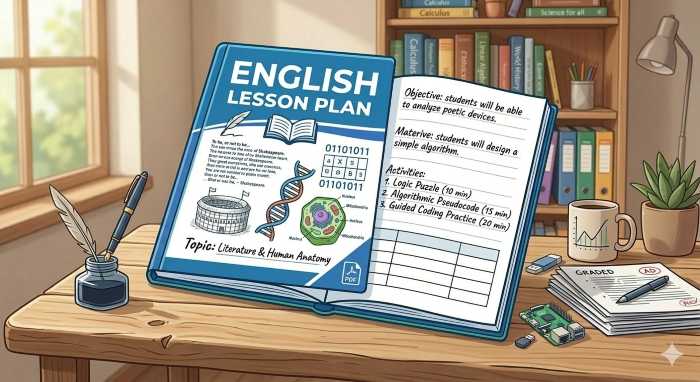
                  English Lesson Plan – B.Ed

                  english lesson plan b.ed
                  English lesson plan b.ed

                  Developing an English subject lesson plan for a B.Ed. Route calls for a considerate method to make certain effective teaching and learning results.

                  Outline the teaching techniques, incorporating a mixture of activities which includes reading, writing, talking, and listening physical games to deal with numerous language abilities. Structure the lesson coherently, with a logical development of content. Incorporate diverse sources like literature excerpts, multimedia, and language video games to make the lesson enticing and dynamic.

                  A well-designed English lesson plan now not only imparts knowledge but also fosters a deeper appreciation for language and verbal exchange abilities.

                  Just Download English Lesson Plan – B.ed 2nd-year L.P. file – Sample files, Select the one you find best for you, and download and copy the content in your file.


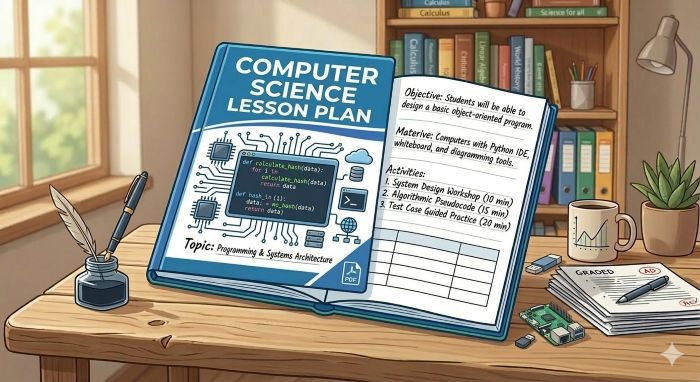
                  Computer Science lesson plan for B.ED

                  computer science lesson plan
                  computer science lesson plan

                  Introduce the lesson with a relevant context or real-world application to capture students’ interest. Structure the content in a logical sequence, covering key topics and integrating hands-on activities or demonstrations to reinforce theoretical concepts. Incorporate resources such as coding exercises, simulations, and multimedia materials to enhance engagement.

                  Design practical assessments throughout the lesson to figure out student understanding, and include a summary assessment to evaluate the overall success of learning goals. A well-crafted computer science lesson plan not only delivers theoretical knowledge but also cultivates problem-solving skills and practical application of computational concepts.

                  Just Download the computer lesson plan for B.ed – B.ed 2nd year L.P. file – Sample files, Select the one you find best for you, and download and copy the content in your file.


                  Biology lesson plan for B.ED

                  biology lesson plan
                  biology lesson plan

                  Writing a biology lesson plan for a B.Ed. the course requires careful attention of the subject’s complicated ideas and excellent strategies to interact. Start by truly defining the knowledge of targets and outlining what students need to do.

                  Structure the lesson to cover key biological principles in a logical series, incorporating a mix of theoretical discussions, laboratory activities, and multimedia sources.

                  Utilize numerous coaching aids which include diagrams, models, and specimens to enhance understanding. Integrate exams for the duration of the lesson to evaluate pupil comprehension and include a summary assessment to evaluate overall learning outcomes.

                  Just Download the Biology lesson plan for B.ed – B.ed 2nd year L.P. file – Sample files, Select the one you find best for you, and download and copy the content in your file.


                  Commerce lesson plan for B.ED

                  commerce lesson plan for b.ed
                  commerce lesson plan for b.ed

                  Crafting a commerce lesson plan for a B.Ed. includes strategic plans to efficaciously bring key business and economic ideas. Start with the aid of setting up clear knowledge of targets, specifying what students have to realize or attain by the stop of the lesson.

                  Begin the lesson with an enticing creation that connects the content to real-global enterprise scenarios or economic ideas. Structure the lesson logically, protecting fundamental subjects which include accounting, advertising and marketing, finance, or business ethics.

                   Incorporate a mix of instructional methods, such as discussions, case studies, and practical physical activities, to cater to numerous learning styles.

                  Integrate checks during the lesson to gauge student comprehension, with a final evaluation to evaluate the attainment of studying goals. A nicely designed lesson plan no longer only imparts theoretical understanding but also cultivates essential thinking and practical knowledge of commerce standards.

                  Just Download the Commerce lesson plan for B.ed – B.ed 2nd year L.P. file – Sample files, Select the one you find best for you, and download and copy the content in your file.


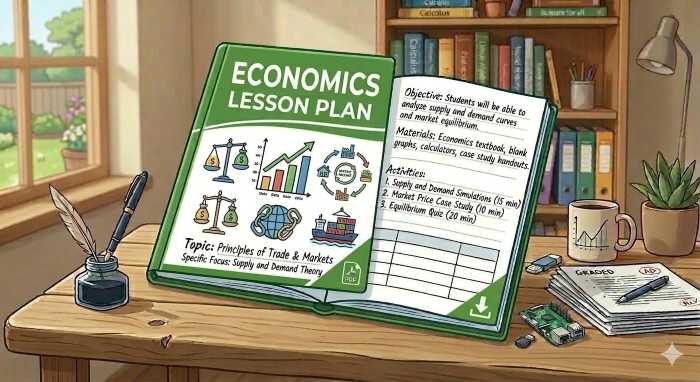
                  Lesson Plan for Economics for B.Ed

                  lesson plan for economics for b ed
                  lesson plan for economics for b ed

                  To develop an effective Lesson Plan for economics in B.Ed, follow these steps:

                  1. Clearly define the learning objectives: – Define what students should understand and achieve by the end of the lesson.

                  2. Engaging Introduction: – Start the course with real-world business cases to make the content connect and generate interest.

                  3. Structured Syllabus: – Arrange the course into pieces, covering major topics such as accounting, finance, business, business ethics, and so on.

                  4. A variety of teaching methods: – Use a variety of methods such as class discussions, case studies, and multimedia presentations to make learning interactive and interesting.

                  5. Encourage critical thinking: – Include activities that encourage students to analyze business issues and make informed decisions.

                  6. Hands-On Activities: – Provide practical exercises or projects that enable students to apply concepts in real-world situations.

                  7. Assessment and Feedback: – Include assessments that demonstrate understanding and provide constructive feedback to help students improve.

                  8. Include real-world examples: – Share real business examples, success stories, or challenges to make proposals relevant.

                  9. Encourage cooperation: – Encourage teamwork and cooperation through group activities, empowering students to learn from each other.

                  10. Embracing different learning styles: – Use a variety of teaching methods to address different learning aspirations and ensure understanding.

                  Just Download the Lesson Plan for Economics for b.ed – B.ed 2nd year L.P. file – Sample files, Select the one you find best for you, and download and copy the content in your file.


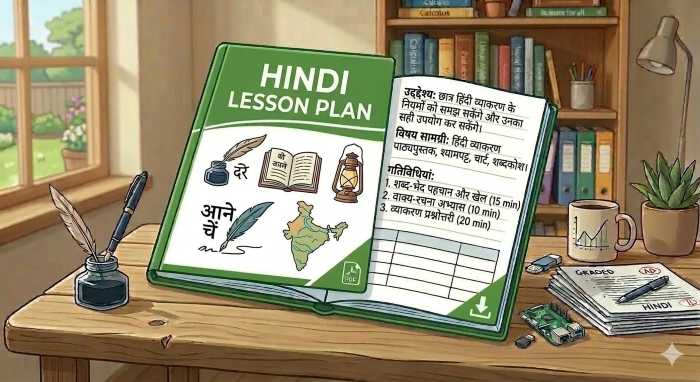
                  Lesson Plan Hindi Subject for B.ED

                  hindi lesson plan
                  hindi lesson plan

                  बी.एड.के लिए हिंदी भाषा की पाठ योजना बनाते समाये प्रशिक्षण पद्धति में साहित्य और भाषा में सामग्री और विषयों की समझ शामिल शामिल करिये। सीखने के उद्देश्ये तथा परिणामों को प्रारम्भ मैं बता कर स्पष्ट करे की अंत तक उन्हें क्या समझना है और पढ़ना है।

                  कक्षा की शुरुआत एक प्रेरक उद्घोटन से करें जहां विषय के बारे में जानकारी संस्कृति या साहित्यिक विषयों से संबंध बताती है, जिसमें छात्रों की रुचि हो सकती है। पाठ को व्याकरण, शब्दावली से तार्किक रूप से संरचित करें और साहित्य की व्याख्या करें।

                  पढ़ने के कौशल का विस्तार करने और विभिन्न शिक्षण दृष्टिकोणों का समर्थन करने के लिए एक इंटरैक्टिव वार्तालाप, एक शब्द खेल और एक अभ्यास सहित विभिन्न शैक्षणिक रणनीतियों को मिलाएं। समझ को बढ़ावा देने के लिए हिंदी पुस्तकों, वीडियो ट्यूटोरियल और भाषा गतिविधियों में से किसी एक के साहित्य उद्धरण का उपयोग करें।

                  पाठ का मूल्यांकन करें, जैसे छात्रों की समझ का मूल्यांकन करने के लिए रचनात्मक मूल्यांकन और यह जांचने के लिए अंतिम मूल्यांकन, कि क्या जो सिखाया गया है वो हासिल किया है या नहीं ।

                  लचीलापन पाठ योजना का एक महत्वपूर्ण पहलू है ताकि सभी गतिविधियों को छात्रों की भाषा दक्षता और सांस्कृतिक पृष्ठभूमि के विभिन्न स्तरों से मेल खाने के लिए अनुकूलित किया जा सके।

                  एक अच्छी हिंदी पाठ योजना (Hindi lesson Plan) न केवल प्रतिभागी को भाषा बोलना सिखाती है, बल्कि हिंदी भाषा की गहरी जड़ें जमा चुकी साहित्यिक और सांस्कृतिक विरासत के प्रति सम्मान की भावना भी पैदा करती है।

                  Just Download the Lesson Plan for Hindi for b.ed – B.ed 2nd year L.P. file – Sample files, Select the one you find best for you, and download and copy the content in your file.


                  Physical Science Lesson Plan for B.ED

                  physical science lesson plan
                  physical science lesson plan

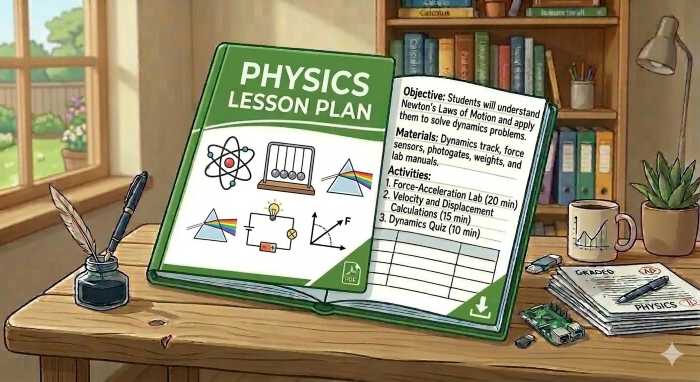
                  Designing a Physical Science lesson plan for a Bachelor of Education (B.Ed) program. the course has a strategic aspect which is addressed through the formulation of pedagogical motives and the teaching of important physics and chemistry subjects. 

                  Start with the learning objectives, where the desired results of the student should be defined by the end of the lesson. Design an introduction that is interesting and shows links between the content and applications in the real world, so that the reader will be ready to read and will be willing to learn more. 

                  The lesson is structured in a logical manner that covers the important topics in physics and chemistry, with experimenting and demonstrating as the key elements. Utilize different learning tools such as models, sketches, and laboratory apparatus to increase understanding. 

                  Implement a variety of teaching methods such as discussions, solvable problems, and experiments to make the course interesting for different learners. Design assessments during the lesson, too, including formative assessment for continual feedback and summative assessment as the final evaluation of learning objectives. 

                  Well-developed Physical Science lesson plan not only transmits theoretical knowledge but also encourages a practical understanding of scientific principles.

                  Just Download the Physical Science Lesson Plan for b.ed – B.ed 2nd year L.P. file – Sample files, Select the one you find best for you, and download and copy the content in your file.


                  SST Lesson Plan for B.ED (Social Science Lesson Plan)

                  SST lesson plan in hindi
                  SST lesson plan in hindi

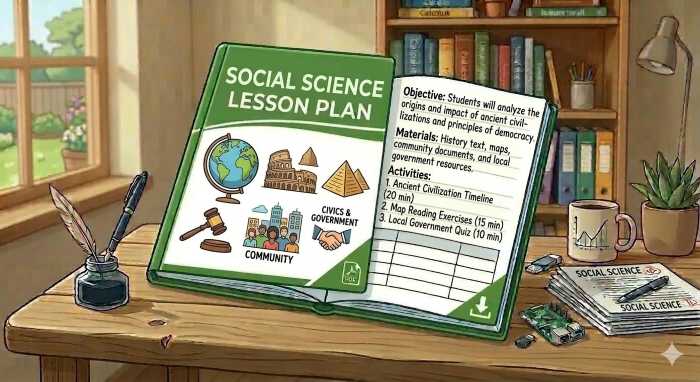
                  Developing the B.Ed. Lesson Plan for Social Sciences. course has a practical structure for delivering educational subjects like history, geography, sociology, and political science. 

                  Anchoring the lesson onto a goal will help in understanding exactly what students would be able to understand or accomplish at the end of the lecture. Give the topic a start with an attractive outline. The outline connects lessons to the current real and reliable issues, which in turn creates curiosity among the students and makes the topics more relevant to them. 

                  Organize the lesson logically with important concepts and events discussed and thinking critically and being analytical are encouraged throughout the lesson. Apply a combination of instructional approaches, for example, discussions, case studies, and multimedia resources to fit in with different learning styles. 

                  Create activities that push students to engage in historical events, geographical features, or social structures by using them. Constantly monitor the student’s progress with various types of assessments, including formative for the feedback as well as summative to generalize an overall mastery of the learning objective. 

                  A well-planned Social Science lesson plan not only enables a transfer of knowledge but also builds upon it by inspiring a deep understanding of the complexity and interdependence of human societies.

                  Just Download the SST Lesson Plan for B.ed (social science) – B.ed 2nd year Lesson Plan file – Sample files, Select the one you find best for you, and download and copy the content in your file.


                  Sanskrit Lesson Plan for B.ED

                  sanskrit lesson plan
                  sanskrit lesson plan

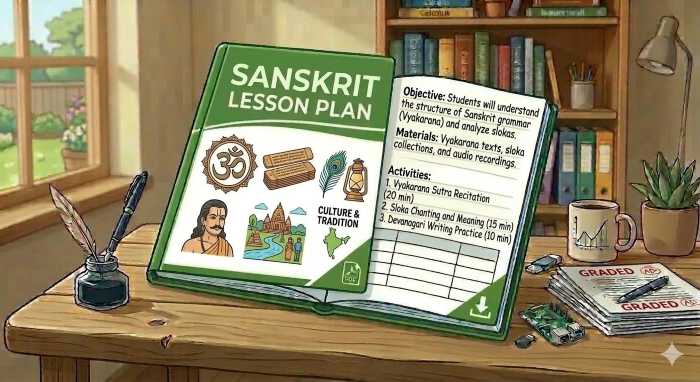
                  Just Download the Sanskrit Lesson Plan for B.ed – B.ed 2nd year Lesson Plan file – Sample file


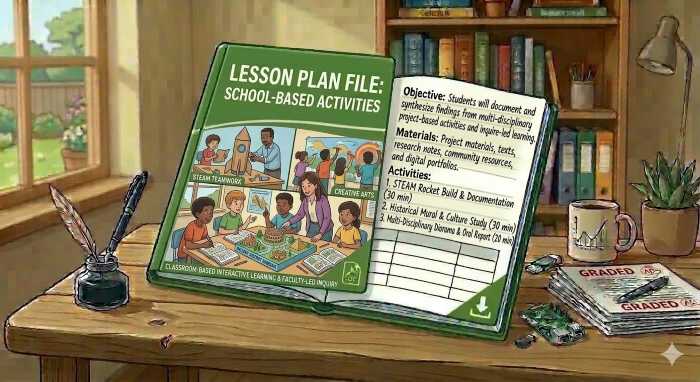
                  School-Based Activity File – Download PDF


                      Click to Know More – How to Write Micro Teaching Lesson Plan

                  B.ED Practical Files

                  1

                  B.ED 1st Year Practical Files | B.ED Practical Files

                  B.ED COURSE

                  In the B.ED 1st year, there are 4 B.Ed practical files (B.ED Course Syllabus) you need to prepare for your External Assessment. Each file contains 50 Marks, where 30 marks will be evaluated by the college and 20 marks will be evaluated by the External Examiner.

                  1. READING AND REFLECTING ON TEXTS

                  reading and reflecting on text

                  Course Content

                  UNIT – I (B.ED Practical Files)
                  Reading as a Language Skill
                  · acquisition of reading skills
                  · reading for global and local comprehension
                  · reading a wide variety of texts such as descriptive, narratives, conversations,
                  biographical sketches, plays, poems, letters, screenplays, reports, news reports
                  Attentive/Close Reading and Reflecting on Texts
                  · Identify and select the texts: course text and beyond
                  Ø Understanding the process of critical reading
                  Ø Ways of reading: pre-reading and post-reading

                  UNIT – 2 (B.ED Practical Files)
                  Developing Writing skills
                  · Writing for a specific purpose and specific audience
                  · Experience the classroom process of Writing (including collaboration, and editing)
                  · Recognizing errors as part of the learning process
                  · Editing the written texts in terms of discourse, syntax, morphology, and writing
                  conventions.

                  Writing and Reflecting on Text
                  · Understand the concept of reflective writing
                  · Distinguished Features of Reflective Writing’s
                  · Read, reflect, and think critically: recognize the benefits of reflecting on developing
                  teaching philosophy
                  · Includes knowledge of types of texts: their structure, language features, word knowledge
                  and content knowledge acquired through learning and personal experience

                  Just download Reading & Reflecting on Text B.Ed 1st year Practical files – Sample files – Hindi or English Medium, select the one you find best for you, and copy the content in your file.

                  Download Reading & Reflecting on Text – English Medium Sample 1

                  Download Reading & Reflecting on Text – English Medium Sample 2

                  Download Reading & Reflecting on Text – English Medium Sample 3

                  Download Reading & Reflecting on Text – Hindi Medium Sample 1

                  Download Reading & Reflecting on Text – Hindi Medium Sample 2

                  Download Reading & Reflecting on Text – Hindi Medium Sample 3

                  2. DRAMA AND ART IN EDUCATION

                  drama and art in education

                  Course Content

                  UNIT – I (B.ED Practical Files)

                  Understanding Drama and Arts in Education
                  · Meaning and Concept of ‘Art’ and ‘Arts in Education’,
                  · Understanding aesthetics and its education relevance
                  · Drama and Arts as Pedagogy of learning and development- understanding drama, Arts
                  (Visual & Performing Arts) and their importance in teaching-learning of different
                  subjects at the school level.
                  · Range of art activities in drama
                  · Experiencing, responding and appreciating drama
                  · Exposure to selective basic skills required for drama
                  · Drama: Facilitating interest among students: planning and implementing activities
                  · Enhancing learning through drama for children with and without special needs:
                  strategies and adaptations

                  UNIT – 2 (B.ED Practical Files)

                  Media and Electronic Arts
                  · Range of art activities in media and electronic art forms
                  · Experiencing, responding and appreciating media and electronic arts
                  · Exposure to selective basic skills in media and electronic arts
                  · Media and electronic arts: Facilitating interest among students: planning and
                  implementing activities
                  · Enhancing learning through media and electronic art for children with and without
                  special needs: strategies and adaptations

                  Just Download Drama & Art in Education B.ed 1st year Practical files – Sample files – Hindi or English Medium, Select the one you find best for you and copy the content in your file.

                  Download Drama & Art in Education – English Medium Sample 1

                  Download Drama & Art in Education – English Medium Sample 2

                  Download Drama & Art in Education – English Medium Sample 3

                  Download Drama & Art in Education – Hindi Medium Sample 1

                  Download Drama & Art in Education – Hindi Medium Sample 1

                  NTT Course in Delhi Complete Guide

                  0

                  Early Childhood Care & Education (NTT Course in Delhi) is crucial and important part of a infant learning growth, and Cambridge Education plays a very significance role providing NTT courses in Delhi. This article explains the core value of the program lightning on significance of NTT course, curriculum, mode of study, fee system and Future Aspects.

                  The importance of NTT courses creates the foundation for educators in nurturing young minds. Nursery teacher training courses aim to prepare future primary teachers with the knowledge and skills needed to engage infants and young children in developmentally appropriate care and education. 

                  These course do real more about early childhood; they are related to child development, instructional strategies, management in the classroom, nutrition and health safety practices together with curriculum for preschool and kindergarten ages. Learning materials in the coursework rests on a combination of theory and practice, which are made evident by including field experiences set in nursery school classrooms.

                  ntt course govt college
                  ntt course govt college

                  Navigating the NTT Course in Delhi Landscape

                  Understanding the Significance of Nursery Teacher Training

                  The importance of NTT courses creates the foundation for educators in nurturing young minds. Cambridge Education’s commitment to excellence in this field is obvious through its thoughtfully designed curriculum.

                  Blending Class Modes: Online & Offline

                  Cambridge Education redefines accessibility with both ntt course online and offline modes, ensuring flexibility for aspiring teachers. The digital realm allows for remote learning, while physical classes provide hands-on experience, creating a holistic learning environment.

                  NTT Course Curriculum: A Holistic Approach

                  NTT Course in Delhi | Curriculum Beyond Theory

                  The curriculum of the NTT course in Delhi offered by Cambridge Education represents a holistic approach, which goes beyond theoretical knowledge. This unique feature is facilitated by the combination of practical sessions, art and craft classes, teaching practice as well workshops alongside theory classes providing an enriched learning experience for those who aspire to become a teacher in nursery section.

                   Through the coursework participants learn how to design interesting lessons, discipline students accordingly, observe children’s progress and establish rapport with all stakeholders. The credentials that can be needed differ, however many nursery educator preparing programs result in a certificate, predominance or companion’s degree into by and large early youth admittance. Nursery teachers with zeal to mold children’s lives become the cornerstones of building a solid knowledge base that will guide children on their life-long road towards success.

                  ntt course online
                  ntt course online

                  Engaging Art and Craft Classes

                  In order to maintain the creativity and creative expression, an addition of a separate art & craft syllabus has been added for early childhood education curriculum. Not only these Art & Craft sessions help in enhancing the artistic skill of future teachers, It also teaches them to be innovative and creative about teaching methods.

                  To this, the Cambridge Education NTT Course in Delhi curriculum incorporates art & craft classes to address creative expression in early childhood education. These sessions not only provide future educators with artistic skills but also teach them new ways of embedding creativity in their teaching methods.

                  Practical Sessions: Bridging Theory and Practice

                  To understand the difference between theory and actual experience, NTT course at Cambridge Education includes practical sessions two days a week. Such live Practical’s offer students an opportunity to apply the pedagogical theories in a controlled environment, thus preparing them adequately for real life challenges of working with students.
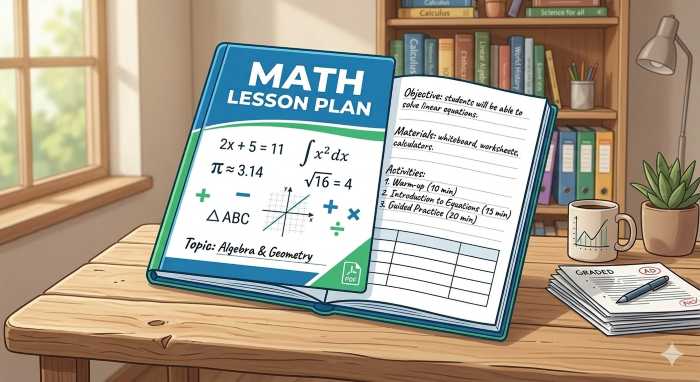
                  Teaching Practice: Learning in Action

                  Teaching practice is one of the features of Cambridge Education NTT course in Delhi. Students take advantage of the opportunity to interact with live students under faculty guidance, thus improving their knowledge on effective teaching strategies and enabling them practice better instructional approaches.
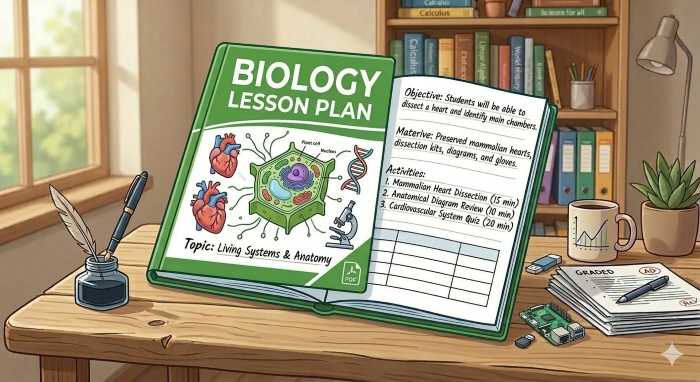
                  Enriching Workshops

                  To complement the regular course curriculum, Cambridge Education arranges workshops from time to time which help them in improving their skills towards evolving trends and innovating teaching practices along with understanding best of early childhood education. These workshops allow active learning& professional growth.

                  These core elements are therefore integrated into the curriculum of Cambridge Education that ensures that its NTT course in Delhi/NCR not only provides theoretical knowledge, but also furnishes future teachers with very important traits as creativity and practical skills necessary for success in early childhood education. This Sincere approach testifies to a rearing of adequately trained and qualified teachers who are capable of teaching in the live environment.

                  ntt course fees
                  ntt course fees

                  Flexible Instalment System

                  Considering the budget restraints Cambridge Education has a payment plan where students don’t need to pay full NTT Course fees at one time. After the registration fee is paid, they can pay in monthly instalment of Rs 1000 each.

                  Tailored Programs for Play, Pre-Primary, and Nursery Teacher Training

                  Crafting Playful Pedagogy

                  The curriculum is so skilfully designed to create a vibrant atmosphere through play activities which fulfill its significant role in a child’s cognitive and social development. Interactive sessions and engaging activities redefine play-based learning.

                  Nurturing the Pre-Primary Minds

                  Cambridge’s NTT course curriculum provides a seamless combination of theory and practical classes, spanning the journey from Montessori section to primary section, enabling students to teach children of any age in class room up to primary section.

                  ntt course in delhi
                  ntt course in delhi

                  Excellence in Nursery Education

                  In the nursery section, Cambridge Education stands out as the leader in educational excellence providing NTT Course in Delhi / India in online & offline mode. Innovative teaching methods and a nurturing environment prepare students for the academic road ahead.

                  Embarking on the NTT journey with Cambridge Education promises a transformative experience. From flexible learning modes to a faculty of experts, the institute excels in providing quality education. Enriching programs for play, pre-primary, and nursery sections further declare its position as a pioneer in Nursery Teacher Training course.