Home Blog Page 2

MDU B.ED Admission 2026 Guide : Unlock Your Teaching Journey

0
bed from mdu univ
bed from mdu univ

MDU B.ED Admission 2026: Process, Fee, Syllabus

Are you planning to become a government teacher in 2026? The MDU B.Ed. Admission 2026 is a golden opportunity to embark on a fulfilling teaching career journey. In this article, I will guide you through the various aspects of MDU B.Ed. admission, covering eligibility criteria, application procedures, entrance exams, merit lists, counselling, fees, campus facilities, and much more.

What is the Full Form of B.ED?

B.ED, which is widely known as Bachelor of Education, is an undergraduate degree program granted to individuals who have completed a two-year Bachelor’s Degree in Education from any NCTE-recognised institute/college.

B.ED Course Duration

The B.Ed course duration is two years in all universities across India and is classified as an undergraduate (UG) level course. Various universities and institutions are currently accepting applications for the 2026-27 academic session, including MDU B.ED Admission. To be eligible, students must have completed a bachelor’s degree from a UGC-approved university with a minimum of 50% marks.

MDU B.Ed admission 2026

B.ED Course Eligibility Criteria

Aspiring educators seeking admission to the Bachelor of Education (B.Ed) program must first ensure they meet the specified eligibility criteria. To aid in a seamless application process, we have outlined the crucial factors that prospective students should take into account prior to submitting their applications for MDU B.ED Admission.

Educational Qualifications

Candidates seeking admission to MDU B.ED Admission 2026 must hold a bachelor’s degree in a relevant field from a recognised institution with a minimum of 50% Marks.

Age Criteria

There is no age limit mentioned in the B.Ed prospectus of Maharshi Dayanand University, Rohtak, but at the time of filling out the form, we have seen that the maximum age we can select is 50 years for MDU B.ED Admission. It means there is no age limit to study for a Bachelor of Education. Still, yes, there is an age limit in government jobs for TGT & PGT from 35 years to 40 Years as per different states’ eligibility criteria.

Reservation Policies Criteria

There are 85% of seats reserved for Haryana domicile students in the 1st round and 15% for other students, but MDU converted all vacant seats to the all-India quota in the 2nd & 3rd rounds.

Application Form Procedure for B.ED Admission

The application process for MDU B.ED Admission 2026 is online. Applicants can follow these simple steps to complete the online application.

Online Application Steps

The online application involves filling out personal and academic details. A step-by-step guide ensures that candidates provide accurate information, reducing the chances of errors.

    Fill the Inquiry form for B.Ed., JBT, and M.Ed. admission.

     Document Submission

    The student needs to submit the original documents, a scanned copy of their 10th mark sheet & certificate, 12th mark sheet, graduation mark sheet front & backside, post-graduation (if any) mark sheet front  & Backside, Aadhar Card Copy, 1 recent passport-size copy, and a thumb impression of the left hand at the time of filling the online application form. Just remember to resize your images as per the size mentioned in the link for MDU B.ED Admission.

    b.ed from mdu
    b.ed from mdu

    Application Fee Details

    There is a counselling fee in all universities to submit the B.ED Application form in all three rounds. Like if we talk about MDU B.Ed Admission 2025, there is Rs. 1000 for the general category & Rs. 650 for the Reserved category in 1st round of counselling. If we go further for the 2nd and 3rd rounds, it is Rs. 2000 & 3000, respectively.

    B.ED  Entrance Exam

    As we all know, there is an entrance exam in DU, IP University, UP B.ED & Bihar B.ED, but there is no entrance exam in MDU B.Ed admission. There is direct Admission on a merit basis; Candidates are shortlisted through the Merit List after online counselling is over in every round.

     Merit List Publication

    Once the counselling process (online form filling) is completed, MDU publishes a merit list. The counselling process follows, including seat allotment based on the candidate’s rank and reservation preferences, like Haryana domicile or All India Category. The merit list showcases the top-ranked candidates, providing transparency in the selection process for MDU B.ED Admission.

    Seat Allotment

    The final step is seat allotment, where successful candidates secure their place in an NCTE-recognised college allotted by Maharishi Dayanand University. This is the beginning of their academic journey at MDU.

    Offline Counselling Process

    MDU B.ED Admission 2025 final counselling process is a formal process where candidates interact with their concerned B.ED college allotted in Merit and submit their Xerox Copies of all documents duly self-attested along with the admission fee (1st instalment) on or before the due date.

    B.ED Course Fees in MDU

    The fee for self-financed colleges across Jhajjar & Rohtak District under MDU is Rs. 44,000 plus 5450 other charges annually.
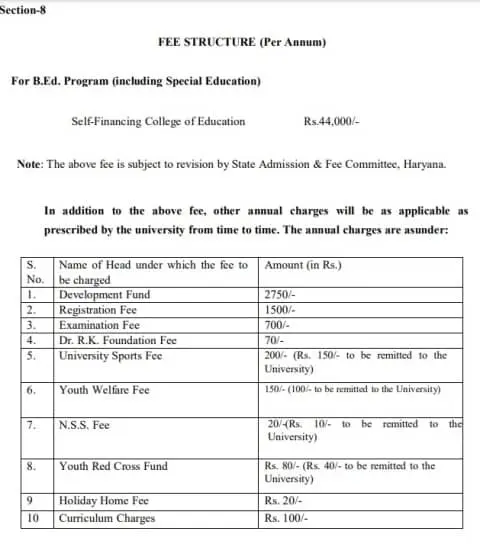
    The fee structure is designed to be transparent, allowing candidates to plan their finances accordingly. Officially, you can pay a total of 2 years’ fees in 4 instalments, but it may vary from college to college, so kindly coordinate with your concerned college or admission centre where you have been admitted. 

    Payment Options

    MDU offers various payment options, making it convenient for students to pay their fees. Cash payment, demand draft, Online UPI transactions, and bank transfers are standard methods.

    Scholarship Opportunities

    Scholarships and financial aid options are also available for Haryana Domicile students, but Bihar State candidates can also avail of scholarships from the Bihar Govt Scholarship Schemes announced from time to time.

    Accommodation Options :

    For out-of-town students, MDU does not offer accommodation options on or near the campus, as you have not been admitted to the university campus; you have enrolled in a College under MDU situated in different broad areas of Rohtak & Jhajjar. So if there is an offline class, then you need to select the PG option near your college only, but if there is an online class available through the college, then there is no need to search for a place to stay. You can take the class from your hometown only.

    Library and Labs :

    MDU’s well-equipped library and laboratories offer resources and tools necessary for comprehensive learning. Students have access to a vast collection of books, journals, and research materials.

    B.ED Course Syllabus

    In the first year, there are 3 common subjects & 2 specialisation subjects offered by all colleges & universities under NCTE guidelines for MDU B.ED Admission.

    The first three common subjects are :

    1. Learning & Teaching
    2. Childhood & Growing Up
    3. Contemporary India

    Teaching Subjects for Specialisation are :

    •  B.ED in Social Science (History, Geography, Social, Political, Psychology)
    •  B.ED  in Physical Science (Physics & Chemistry)
    •  B.ED in Sanskrit
    •  B.ED in Punjabi
    •  B.ED in Economics
    •  B.ED in Commerce
    •  B.ED in English
    •  B.ED in Special Education
    •  B.ED in Computer Science
    •  B.ED in Hindi
    •  B.ED in Mathematics
    •  B Ed in Home Science
    •  B.ED in Biology
    •  B.ED in Music
    •  B.ED in Urdu

    Scope Of B.ED

    Previously, in India, there was neither growth nor good income for teaching professionals, but nowadays, teaching is a reputable profession with good income sources. There are many ways you can earn a living after completing your bachelor’s degree in education. Along with your school job, private tuition is an excellent source of extra income that can provide you with a higher standard of living. A list of a few profiles is shared below for your further update :

    B.ED Admission in Delhi/NCR
    B.ED Admission in Delhi/NCR heading

    How the Cambridge Group helps you to get Admission in MDU B.ED admission 2025

    You can contact us via our website, social media platforms, WhatsApp, or contact numbers shared on our website to assist you with yourย MDU B.Ed Admission 2026. Once you get in touch using any of the mentioned methods, one of our experienced advisors will contact you to resolve any queries you may have about the upcoming session admission process.

    Our team will gather all the information required for admission in B.ED from MDU and then help you collect all the required documents and fill out your form. From filling out an online form to getting confirmed admission and classes to providing you with a mark sheet & Degree, we will provide you with direct support and will work as a bridge between a student and the college.

    We have multiple Government universities under our counselling domain, so we’ll be able to recommend the most suitable university and program for your needs. So fill out the inquiry form & our advisors will call you, or you can directly call our helpline numbers to get admission in the MDU B.ED admission 2026 session.

      Fill the Inquiry form for B.Ed., JBT, and M.Ed. admission.

      FAQs

      Can we do B.ED after 12th

      No, typically, you cannot pursue B.Ed (Bachelor of Education) directly after completing the 12th grade. B.Ed is a postgraduate program, and eligibility usually requires candidates to have completed a bachelor’s degree in any discipline. After obtaining a bachelor’s degree, individuals can then apply for and pursue a B.Ed program to become a qualified teacher.

      How many years of the B.Ed. Course

      The duration of a B.ED (Bachelor of Education) course is typically two years. However, the duration may vary based on the education system and the specific regulations of the university or educational institution offering the B.ED program.

      When will the B.Ed be of 1 year?

      Never, As far as last update is concerned in the New Education Policy, B.ED duration in future will increase from 2 years prog to 4 years till 2028.

      Is B.ED compulsory for CTET (Central Teacher Eligibility Test)

      While B.Ed is not compulsory for CTET, having a B.Ed degree can be beneficial as it enhances your understanding of teaching methodologies and educational concepts. CTET is an eligibility test for teaching positions, and candidates with or without B.Ed can appear for it, depending on the specific requirements outlined by the recruiting authority.

      Is B.Ed. a professional course

      Yes, B.Ed (Bachelor of Education) is considered a professional course. It is specifically designed to prepare individuals for a career in teaching and education. The program focuses on equipping students with the necessary skills, knowledge, and pedagogical techniques required to become effective educators.

      What is EPC in B.ED

      EPC stands for Enhancing Professional Capacities, in B.ED the term “EPC” could refer to some special training module designed by a particular university, educational institution, or a localised program.

      Other Important Links

      B.ED Course Details in Hindi

      0
      B.ED course details in hindi
      B.ED course details in hindi

      เคฌเฅ€.เคเคก เค•เฅ‹เคฐเฅเคธ เค•เฅ€ เคตเคฟเคธเฅเคคเฅƒเคค เคœเคพเคจเค•เคพเคฐเฅ€ เคนเคฟเค‚เคฆเฅ€

      เคฌเฅ€.เคเคก (เคฌเฅˆเคšเคฒเคฐ เค‘เคซ เคเคœเฅเค•เฅ‡เคถเคจ) เคญเคพเคฐเคค เคฎเฅ‡เค‚ เคธเฅเค•เฅ‚เคฒเฅ‹เค‚ เคฎเฅ‡เค‚ เคถเคฟเค•เฅเคทเค• เคฌเคจเคจเฅ‡ เค•เฅ‡ เคฒเคฟเค เคเค• เคตเฅเคฏเคพเคตเคธเคพเคฏเคฟเค• เคกเคฟเค—เฅเคฐเฅ€ เคชเคพเค เฅเคฏเค•เฅเคฐเคฎ เคนเฅˆเฅค เคฌเฅ€.เคเคก เคเค• เคธเฅเคจเคพเคคเค•เฅ‹เคคเฅเคคเคฐ เคกเคฟเค—เฅเคฐเฅ€ เคนเฅˆ เคœเฅ‹ เค†เคฎเคคเฅŒเคฐ เคชเคฐ เคฆเฅ‹ เคธเคพเคฒ เค•เฅ€ เค…เคตเคงเคฟ เค•เฅ‡ เคฒเคฟเค เคšเคฒเคคเฅ€ เคนเฅˆเฅค เค‡เคธ เคชเคพเค เฅเคฏเค•เฅเคฐเคฎ เค•เฅ‹ เค•เคฐเคจเฅ‡ เค•เฅ‡ เคฒเคฟเค เคธเฅเคจเคพเคคเค• เคกเคฟเค—เฅเคฐเฅ€ เค†เคตเคถเฅเคฏเค• เคนเฅˆเฅค

      เคฌเฅ€.เคเคก เคชเคพเค เฅเคฏเค•เฅเคฐเคฎ เค•เคพ เค‰เคฆเฅเคฆเฅ‡เคถเฅเคฏ เคญเคพเคตเฅ€ เคถเคฟเค•เฅเคทเค•เฅ‹เค‚ เค•เฅ‹ เคถเคฟเค•เฅเคทเคฃ เค•เฅŒเคถเคฒ, เคตเคฟเคทเคฏ-เคตเคธเฅเคคเฅ เค•เฅ€ เคœเคพเคจเค•เคพเคฐเฅ€ เค”เคฐ เคถเคฟเค•เฅเคทเคพเคถเคพเคธเฅเคคเฅเคฐ เคธเคฟเค–เคพเคจเคพ เคนเฅˆเฅค เค‡เคธ เคชเคพเค เฅเคฏเค•เฅเคฐเคฎ เคฎเฅ‡เค‚ เคถเคฟเค•เฅเคทเค• เคถเคฟเค•เฅเคทเคพ, เคฌเคพเคฒ เคฎเคจเฅ‹เคตเคฟเคœเฅเคžเคพเคจ, เคถเคฟเค•เฅเคทเคฃ เคตเคฟเคงเคฟเคฏเคพเค, เคถเฅˆเค•เฅเคทเคฃเคฟเค• เคชเฅเคฐเฅŒเคฆเฅเคฏเฅ‹เค—เคฟเค•เฅ€ เค”เคฐ เคธเฅเค•เฅ‚เคฒ เคชเฅเคฐเคฌเค‚เคงเคจ เคœเฅˆเคธเฅ‡ เคตเคฟเคทเคฏ เคถเคพเคฎเคฟเคฒ เคนเฅ‹เคคเฅ‡ เคนเฅˆเค‚เฅค

      B.ed full form in Hindi

      The full form of B.Ed in Hindi is “เคถเคฟเค•เฅเคทเคพ เคฎเฅ‡เค‚ เคธเฅเคจเคพเคคเค•” (Bachelor of Education).

      The full form of B.Ed in Hindi is โ€œเคถเคฟเค•เฅเคทเคพ เคฎเฅ‡เค‚ เคธเฅเคจเคพเคคเค•โ€ (Bachelor of Education).

      เคฌเฅ€.เคเคก เคชเคพเค เฅเคฏเค•เฅเคฐเคฎ เค•เฅ€ เคฎเฅเค–เฅเคฏ เคตเคฟเคถเฅ‡เคทเคคเคพเคเค:

      – เค…เคตเคงเคฟ: เคฌเฅ€.เคเคก เค†เคฎเคคเฅŒเคฐ เคชเคฐ เคฆเฅ‹ เคธเคพเคฒ เค•เคพ เคชเฅ‚เคฐเฅเคฃเค•เคพเคฒเคฟเค• เคชเคพเค เฅเคฏเค•เฅเคฐเคฎ เคนเฅˆเฅค เค•เฅเค› เคธเค‚เคธเฅเคฅเคพเคจ เคเค• เคธเคพเคฒ เค•เคพ เคชเคพเค เฅเคฏเค•เฅเคฐเคฎ เคญเฅ€ เคชเฅเคฐเคฆเคพเคจ เค•เคฐเคคเฅ‡ เคนเฅˆเค‚เฅค

      – เคชเคพเค เฅเคฏเค•เฅเคฐเคฎ เคธเคพเคฎเค—เฅเคฐเฅ€: เคฌเฅ€.เคเคก เคชเคพเค เฅเคฏเค•เฅเคฐเคฎ เคฎเฅ‡เค‚ เคถเคฟเค•เฅเคทเคฃ เค•เฅŒเคถเคฒ, เคชเคพเค เฅเคฏ เคตเคฟเคทเคฏเฅ‹เค‚ เค•เฅ€ เคœเคพเคจเค•เคพเคฐเฅ€, เคถเคฟเค•เฅเคทเคพเคถเคพเคธเฅเคคเฅเคฐ, เคฌเคพเคฒ เคฎเคจเฅ‹เคตเคฟเคœเฅเคžเคพเคจ เค”เคฐ เคธเฅเค•เฅ‚เคฒ เคชเฅเคฐเคฌเค‚เคงเคจ เคœเฅˆเคธเฅ‡ เคตเคฟเคทเคฏ เคถเคพเคฎเคฟเคฒ เคนเฅ‹เคคเฅ‡ เคนเฅˆเค‚เฅค

      – เค‡เค‚เคŸเคฐเฅเคจเคถเคฟเคช: เคชเคพเค เฅเคฏเค•เฅเคฐเคฎ เค•เฅ‡ เคฆเฅŒเคฐเคพเคจ เค›เคพเคคเฅเคฐเฅ‹เค‚ เค•เฅ‹ เคธเฅเค•เฅ‚เคฒเฅ‹เค‚ เคฎเฅ‡เค‚ เค‡เค‚เคŸเคฐเฅเคจเคถเคฟเคช เค•เคฐเคจเคพ เค…เคจเคฟเคตเคพเคฐเฅเคฏ เคนเฅ‹เคคเคพ เคนเฅˆ เคคเคพเค•เคฟ เค‰เคจเฅเคนเฅ‡เค‚ เคตเคพเคธเฅเคคเคตเคฟเค• เค•เค•เฅเคทเคพ เค…เคจเฅเคญเคต เคฎเคฟเคฒ เคธเค•เฅ‡เฅค

      – เคชเคฐเฅ€เค•เฅเคทเคพ เคชเฅˆเคŸเคฐเฅเคจ: เคฌเฅ€.เคเคก เคชเคฐเฅ€เค•เฅเคทเคพ เคฎเฅ‡เค‚ เคฅเฅเคฏเฅ‹เคฐเฅ€ เค”เคฐ เคตเฅเคฏเคพเคตเคนเคพเคฐเคฟเค• เคฆเฅ‹เคจเฅ‹เค‚ เคชเคฐ เคงเฅเคฏเคพเคจ เคฆเคฟเคฏเคพ เคœเคพเคคเคพ เคนเฅˆเฅค เคฒเคฟเค–เคฟเคค เคชเคฐเฅ€เค•เฅเคทเคพ, เคชเฅเคฐเคฏเฅ‹เค—เคพเคคเฅเคฎเค• เค•เคพเคฐเฅเคฏ เค”เคฐ เค‡เค‚เคŸเคฐเฅเคจเคถเคฟเคช เค•เฅ‡ เค†เคงเคพเคฐ เคชเคฐ เคฎเฅ‚เคฒเฅเคฏเคพเค‚เค•เคจ เค•เคฟเคฏเคพ เคœเคพเคคเคพ เคนเฅˆเฅค

      – เคฏเฅ‹เค—เฅเคฏเคคเคพ: เคฌเฅ€.เคเคก เค•เฅ‹ เค•เคฐเคจเฅ‡ เค•เฅ‡ เคฒเคฟเค เค•เคฟเคธเฅ€ เคญเฅ€ เคตเคฟเคทเคฏ เคฎเฅ‡เค‚ เคธเฅเคจเคพเคคเค• เคกเคฟเค—เฅเคฐเฅ€ เค†เคตเคถเฅเคฏเค• เคนเฅˆเฅค


      เคฌเฅ€.เคเคก เคชเคพเค เฅเคฏเค•เฅเคฐเคฎ เคชเฅเคฐเคฆเคพเคจ เค•เคฐเคจเฅ‡ เคตเคพเคฒเฅ‡ เค•เฅเค› เคชเฅเคฐเคฎเฅเค– เคตเคฟเคถเฅเคตเคตเคฟเคฆเฅเคฏเคพเคฒเคฏ

      เคนเคฐเคฟเคฏเคพเคฃเคพ

      • เคšเฅŒเคงเคฐเฅ€ เคฐเคฃเคฌเฅ€เคฐ เคธเคฟเค‚เคน เคตเคฟเคถเฅเคตเคตเคฟเคฆเฅเคฏเคพเคฒเคฏ, เคœเฅ€เค‚เคฆ
      • เค•เฅเคฐเฅเค•เฅเคทเฅ‡เคคเฅเคฐ เคตเคฟเคถเฅเคตเคตเคฟเคฆเฅเคฏเคพเคฒเคฏ, เค•เฅเคฐเฅเค•เฅเคทเฅ‡เคคเฅเคฐ
      • เคฎเคนเคพเค‹เคทเคฟ เคฆเคฏเคพเคจเค‚เคฆ เคฏเฅ‚เคจเคฟเคตเคฐเฅเคธเคฟเคŸเฅ€, เคฐเฅ‹เคนเคคเค•
      • เคฆเฅ€เคจเคฌเค‚เคงเฅ‚ เค›เฅ‹เคŸเฅ‚ เคฐเคพเคฎ เคตเคฟเคถเฅเคตเคตเคฟเคฆเฅเคฏเคพเคฒเคฏ, เคฎเฅเคฐเคฅเคฒ
      • เค—เฅเคฐเฅเค—เฅเคฐเคพเคฎ เคตเคฟเคถเฅเคตเคตเคฟเคฆเฅเคฏเคพเคฒเคฏ, เค—เฅเคฐเฅเค—เฅเคฐเคพเคฎ
      • เคšเฅŒเคงเคฐเฅ€ เคญเฅ€เคฎเคธเคฟเค‚เคน เคตเคฟเคถเฅเคตเคตเคฟเคฆเฅเคฏเคพเคฒเคฏ, เคญเคฟเคตเคพเคจเฅ€

      เคฆเคฟเคฒเฅเคฒเฅ€

      • เคœเคพเคฎเคฟเคฏเคพ เคฎเคฟเคฒเฅเคฒเคฟเคฏเคพ เค‡เคธเฅเคฒเคพเคฎเคฟเคฏเคพ, เคจเคˆ เคฆเคฟเคฒเฅเคฒเฅ€
      • เค‡เค‚เคฆเคฟเคฐเคพ เค—เคพเค‚เคงเฅ€ เคฐเคพเคทเฅเคŸเฅเคฐเฅ€เคฏ เคฎเฅเค•เฅเคค เคตเคฟเคถเฅเคตเคตเคฟเคฆเฅเคฏเคพเคฒเคฏ, เคจเคˆ เคฆเคฟเคฒเฅเคฒเฅ€
      • เค—เฅเคฐเฅ เค—เฅ‹เคฌเคฟเค‚เคฆ เคธเคฟเค‚เคน เค‡เค‚เคฆเฅเคฐเคชเฅเคฐเคธเฅเคฅ เคตเคฟเคถเฅเคตเคตเคฟเคฆเฅเคฏเคพเคฒเคฏ, เคฆเคฟเคฒเฅเคฒเฅ€
      • เคฆเคฟเคฒเฅเคฒเฅ€ เคตเคฟเคถเฅเคตเคตเคฟเคฆเฅเคฏเคพเคฒเคฏ, เคจเคˆ เคฆเคฟเคฒเฅเคฒเฅ€

      เคฌเคฟเคนเคพเคฐ

      • เคฒเคฒเคฟเคค เคจเคพเคฐเคพเคฏเคฃ เคฎเคฟเคฅเคฟเคฒเคพ เคตเคฟเคถเฅเคตเคตเคฟเคฆเฅเคฏเคพเคฒเคฏ, เคฆเคฐเคญเค‚เค—เคพ
      • เคชเคŸเคจเคพ เคตเคฟเคถเฅเคตเคตเคฟเคฆเฅเคฏเคพเคฒเคฏ, เคชเคŸเคจเคพ
      • เคฎเค—เคง เคตเคฟเคถเฅเคตเคตเคฟเคฆเฅเคฏเคพเคฒเคฏ, เคฌเฅ‹เคงเค—เคฏเคพ

      เค‰เคคเฅเคคเคฐ เคชเฅเคฐเคฆเฅ‡เคถ

      • เคฌเคจเคพเคฐเคธ เคนเคฟเค‚เคฆเฅ‚ เคตเคฟเคถเฅเคตเคตเคฟเคฆเฅเคฏเคพเคฒเคฏ, เคตเคพเคฐเคพเคฃเคธเฅ€
      • เค‡เคฒเคพเคนเคพเคฌเคพเคฆ เคตเคฟเคถเฅเคตเคตเคฟเคฆเฅเคฏเคพเคฒเคฏ, เคชเฅเคฐเคฏเคพเค—เคฐเคพเคœ
      • เคฒเค–เคจเคŠ เคตเคฟเคถเฅเคตเคตเคฟเคฆเฅเคฏเคพเคฒเคฏ, เคฒเค–เคจเคŠ
      b.ed admission 2024
      bed admission in delhi

      เคฌเฅ€.เคเคก เคชเคพเค เฅเคฏเค•เฅเคฐเคฎ เค•เคพ เคชเคพเค เฅเคฏเค•เฅเคฐเคฎ เคตเคฟเคตเคฐเคฃ เค”เคฐ เคถเฅเคฒเฅเค•:

      เคฌเฅ€.เคเคก เค•เคพ เคชเคพเค เฅเคฏเค•เฅเคฐเคฎ เค†เคฎเคคเฅŒเคฐ เคชเคฐ เคจเคฟเคฎเฅเคจ เคตเคฟเคทเคฏเฅ‹เค‚ เคชเคฐ เค†เคงเคพเคฐเคฟเคค เคนเฅ‹เคคเคพ เคนเฅˆ:


      • โ€“ เคถเคฟเค•เฅเคทเคพ เค•เฅ‡ เคฆเคพเคฐเฅเคถเคจเคฟเค• เค”เคฐ เคธเคฎเคพเคœเคถเคพเคธเฅเคคเฅเคฐเฅ€เคฏ เค†เคงเคพเคฐ
      • โ€“ เคฌเคพเคฒ เคฎเคจเฅ‹เคตเคฟเคœเฅเคžเคพเคจ เค”เคฐ เคตเคฟเค•เคพเคธ
      • โ€“ เคถเคฟเค•เฅเคทเคฃ เค•เฅŒเคถเคฒ เค”เคฐ เคถเคฟเค•เฅเคทเคฃ เคตเคฟเคงเคฟเคฏเคพเค
      • โ€“ เคชเคพเค เฅเคฏเคชเฅเคธเฅเคคเค• เคตเคฟเคถเฅเคฒเฅ‡เคทเคฃ เค”เคฐ เคชเคพเค เฅเคฏเค•เฅเคฐเคฎ เคจเคฟเคฐเฅเคฎเคพเคฃ
      • โ€“ เคญเคพเคทเคพ เคถเคฟเค•เฅเคทเคฃ เคตเคฟเคงเคฟเคฏเคพเค
      • โ€“ เค—เคฃเคฟเคค เคถเคฟเค•เฅเคทเคฃ เคตเคฟเคงเคฟเคฏเคพเค
      • โ€“ เคตเคฟเคœเฅเคžเคพเคจ เคถเคฟเค•เฅเคทเคฃ เคตเคฟเคงเคฟเคฏเคพเค
      • โ€“ เคธเคพเคฎเคพเคœเคฟเค• เคตเคฟเคœเฅเคžเคพเคจ เคถเคฟเค•เฅเคทเคฃ เคตเคฟเคงเคฟเคฏเคพเค
      • โ€“ เคถเคฟเค•เฅเคทเคพ เคฎเฅ‡เค‚ เค†เคˆเคธเฅ€เคŸเฅ€ เค•เคพ เค‰เคชเคฏเฅ‹เค—
      • โ€“ เคถเคฟเค•เฅเคทเคฃ เค…เคญเฅเคฏเคพเคธ
      • โ€“ เคธเฅเค•เฅ‚เคฒ เคชเฅเคฐเคถเคพเคธเคจ เค”เคฐ เคชเฅเคฐเคฌเค‚เคงเคจ

      เคฌเฅ€.เคเคก เค•เฅ‡ เคฒเคฟเค เคถเฅเคฒเฅเค• เคธเค‚เคฐเคšเคจเคพ เคจเคฟเคฎเฅเคจ เคนเฅˆ:

      1. – เคชเค‚เคœเฅ€เค•เคฐเคฃ เคถเฅเคฒเฅเค•: 500 เคธเฅ‡ 2000 เคฐเฅเคชเคฏเฅ‡
      1. โ€“ เคธเฅ‡เคฎเฅ‡เคธเฅเคŸเคฐ เคถเฅเคฒเฅเค•: เคชเฅเคฐเคคเคฟ เคธเฅ‡เคฎเฅ‡เคธเฅเคŸเคฐ 20000 เคธเฅ‡ 35000 เคฐเฅเคชเคฏเฅ‡
      1. โ€“ เคชเคฐเฅ€เค•เฅเคทเคพ เคถเฅเคฒเฅเค•: 1000 เคธเฅ‡ 2000 เคฐเฅ
      1. โ€“ เคชเฅเคธเฅเคคเค•เคพเคฒเคฏ เคถเฅเคฒเฅเค•, เคฎเฅˆเค—เคœเคผเฅ€เคจ เคถเฅเคฒเฅเค• เค†เคฆเคฟ
      1. โ€“ เค•เฅเคฒ เคถเฅเคฒเฅเค•: เคฒเค—เคญเค— 80,000 เคธเฅ‡ 1.5 เคฒเคพเค– เคฐเฅ เคคเค•

      เคฌเฅ€.เคเคก เค•เคฐเคจเฅ‡ เค•เคพ เค•เฅเคฒ เค–เคฐเฅเคš เคถเฅเคฒเฅเค• เค•เฅ‡ เค…เคฒเคพเคตเคพ เคฐเคนเคจเฅ‡, เคฏเคพเคคเฅเคฐเคพ เค”เคฐ เค…เคจเฅเคฏ เค–เคฐเฅเคšเฅ‹เค‚ เคชเคฐ เคญเฅ€ เคจเคฟเคฐเฅเคญเคฐ เค•เคฐเคคเคพ เคนเฅˆเฅค เคตเคฟเคญเคฟเคจเฅเคจ เค•เฅ‰เคฒเฅ‡เคœเฅ‹เค‚ เคฎเฅ‡เค‚ เคถเฅเคฒเฅเค• เคฎเฅ‡เค‚ เค…เค‚เคคเคฐ เคนเฅ‹ เคธเค•เคคเคพ เคนเฅˆเฅค เคฌเฅ€.เคเคก เคเค• เค…เคšเฅเค›เคพ เคชเฅ‡เคถเฅ‡เคตเคฐ เคชเคพเค เฅเคฏเค•เฅเคฐเคฎ เคนเฅˆ เคœเฅ‹ เคถเคฟเค•เฅเคทเค• เคฌเคจเคจเฅ‡ เค•เฅ‡ เคฒเคฟเค เคคเฅˆเคฏเคพเคฐ เค•เคฐเคคเคพ เคนเฅˆเฅค

      เคฌเฅ€.เคเคก เค•เฅ‡ เคฌเคพเคฆ เค•เคฐเคฟเคฏเคฐ เค•เฅ‡ เค…เคตเคธเคฐ:

      • เคธเฅเค•เฅ‚เคฒ เคฎเฅ‡เค‚ เคถเคฟเค•เฅเคทเค• เค•เฅ‡ เคฐเฅ‚เคช เคฎเฅ‡เค‚ เค•เคพเคฎ เค•เคฐเคจเคพ
      • โ€“ เคชเฅเคฐเคพเค‡เคตเฅ‡เคŸ เคŸเฅเคฏเฅ‚เคถเคจ เคฒเฅ‡เคจเคพ
      • โ€“ เคถเคฟเค•เฅเคทเคพ เคธเค‚เคฌเค‚เคงเฅ€ NGOs เคฎเฅ‡เค‚ เค•เคพเคฎ เค•เคฐเคจเคพ
      • โ€“ เคถเฅˆเค•เฅเคทเคฃเคฟเค• เคชเคฐเคพเคฎเคฐเฅเคถเคฆเคพเคคเคพ เคฌเคจเคจเคพ
      • โ€“ เคชเฅเคฐเคถเคฟเค•เฅเคทเค• เค•เฅ‡ เคฐเฅ‚เคช เคฎเฅ‡เค‚ เค•เคพเคฐเฅเคฏ เค•เคฐเคจเคพ
      • โ€“ เคถเคฟเค•เฅเคทเคพ-เคธเค‚เคฌเค‚เคงเฅ€ เคธเฅเคŸเคพเคฐเฅเคŸเค…เคช เคถเฅเคฐเฅ‚ เค•เคฐเคจเคพ
      • โ€“ เคถเฅ‹เคง เค•เคพเคฐเฅเคฏ เค•เคฐเคจเคพ เค”เคฐ เคถเคฟเค•เฅเคทเคพ เค•เฅเคทเฅ‡เคคเฅเคฐ เคฎเฅ‡เค‚ เคฏเฅ‹เค—เคฆเคพเคจ เค•เคฐเคจเคพ

      เคฌเฅ€.เคเคก เคเค• เคฌเคนเฅเคค เคนเฅ€ เคœเคผเคฐเฅ‚เคฐเฅ€ เคชเคพเค เฅเคฏเค•เฅเคฐเคฎ เคนเฅˆ เคœเฅ‹ เค—เฅเคฃเคตเคคเฅเคคเคพเคชเฅ‚เคฐเฅเคฃ เคถเคฟเค•เฅเคทเคพ เคชเฅเคฐเคฆเคพเคจ เค•เคฐเคจเฅ‡ เค•เฅ‡ เคฒเคฟเค เคญเคพเคตเฅ€ เคถเคฟเค•เฅเคทเค•เฅ‹เค‚ เค•เฅ‹ เคคเฅˆเคฏเคพเคฐ เค•เคฐเคคเคพ เคนเฅˆเฅค เคฏเคน เคชเคพเค เฅเคฏเค•เฅเคฐเคฎ เคถเคฟเค•เฅเคทเค• เคฌเคจเคจเฅ‡ เค•เฅ‡ เค‡เคšเฅเค›เฅเค• เคฒเฅ‹เค—เฅ‹เค‚ เค•เฅ‹ เคถเคฟเค•เฅเคทเคฃ เค•เฅŒเคถเคฒ, เคœเฅเคžเคพเคจ เค”เคฐ เคฆเฅƒเคทเฅเคŸเคฟเค•เฅ‹เคฃ เคตเคฟเค•เคธเคฟเคค เค•เคฐเคจเฅ‡ เคฎเฅ‡เค‚ เคฎเคฆเคฆ เค•เคฐเคคเคพ เคนเฅˆเฅค เคฌเฅ€.เคเคก เคเค• เคšเฅเคจเฅŒเคคเฅ€เคชเฅ‚เคฐเฅเคฃ เคฒเฅ‡เค•เคฟเคจ เคฐเฅ‹เคšเค• เค…เคจเฅเคญเคต เคนเฅ‹เคคเคพ เคนเฅˆ เคœเฅ‹ เคถเคฟเค•เฅเคทเค•เฅ‹เค‚ เค•เฅ‹ เค‰เคจเค•เฅ‡ เค•เคฐเคฟเคฏเคฐ เค•เฅ‡ เคฒเคฟเค เค…เคšเฅเค›เฅ€ เคคเคฐเคน เคธเฅ‡ เคคเฅˆเคฏเคพเคฐ เค•เคฐเคคเคพ เคนเฅˆเฅค

      เคนเคฐเคฟเคฏเคพเคฃเคพ เคฌเฅ€.เคเคก เค•เฅ‡ เคฌเคพเคฐเฅ‡ เคฎเฅˆเค‚ เค…เคงเคฟเค• เคœเคพเคจเค•เคพเคฐเฅ€ เคฏเคพ เคเคกเคฎเคฟเคถเคจ เค•เฅ‡ เคฒเคฟเค เค†เคช เคนเคฎเคพเคฐเฅ€ เคนเฅ‡เคฒเฅเคชเคฒเคพเค‡เคจ เคชเฅ‡ เค•เฅ‰เคฒ เค•เคฐ เคธเค•เคคเฅ‡ เคนเฅˆเค‚ เคฏเคพ เค‡เคจเฅเค•เฅเคตเคพเคฏเคฐเฅ€ เคซเฅ‰เคฐเฅเคฎ เคญเคฐเฅ‡ เค”เคฐ เคนเคฎเคพเคฐเฅ€ เคŸเฅ€เคฎ เค†เคชเค•เฅ‹ เคธเค‚เคชเคฐเฅเค• เค•เคฐ เคฒเฅ‡เค—เฅ€.


      B.ED Admission in Delhi/NCR
      B.ED Admission in Delhi/NCR heading

        Fill the Inquiry form for B.Ed., JBT, and M.Ed. admission.

        Other Important Links

        B.Ed Course Eligibility: A Comprehensive Guide

        1
        B.Ed Course Eligibility
        B.Ed Course Eligibility

        Introduction

        In the dynamic landscape of education, pursuing a Bachelor of Education (B.Ed) course is a pivotal step toward a rewarding career in teaching. The journey to becoming an educator begins with understanding the eligibility criteria for enrolling in a B.Ed programme. In this comprehensive guide, we will delve into the nuanced aspects of B.Ed course eligibility, providing you with a roadmap to embark on this educational voyage.

        B.Ed Course Eligibility haryana
        B.Ed Course Eligibility haryana

        Understanding B.Ed Course

        Before we explore the eligibility requirements, let’s briefly highlight what a B.Ed course entails. A Bachelor of Education program is designed to equip aspiring teachers with the necessary skills, knowledge, and pedagogical techniques to excel in the field of education. From foundational teaching methodologies to in-depth subject expertise, a B.Ed course forms the bedrock for a successful teaching career.

        Academic Qualifications: B.Ed course eligibility

        Academic Excellence as a Prerequisite

        To be eligible for a B.Ed course, prospective candidates must possess a strong academic background. Typically, institutions require a minimum of a bachelor’s degree in any discipline from a recognised university. This criterion ensures that candidates entering the teaching profession have a solid foundation in their chosen field of study.

        Subject-Specific Requirements

        In addition to a general bachelor’s degree, some institutions may have subject-specific requirements for B.Ed eligibility. For instance, if aspiring educators wish to specialise in teaching mathematics, a prior degree in mathematics or a related field may be necessary. This ensures that educators have the requisite subject knowledge to effectively teach their chosen subjects.

        Entrance Examinations

        Standardised Testing for B.Ed Aspirants

        Many educational institutions administering B.Ed courses may require candidates to undergo entrance examinations. These assessments are designed to evaluate the candidates’ aptitude, subject knowledge, and teaching potential. Scoring well in these exams not only validates B.Ed course eligibility but can also be a competitive edge in securing admission to reputable B.Ed programmes.

        • Haryana B.Ed course eligibility :
        • There is no more entrance test to get admission to B.Ed in Haryana; there is a direct admission process on a merit basis in all the universities & colleges in all districts. MDU, CRSU, DCRUST, IGU โ€“ Rewari, Gurugram Univ, Chaudhary Bansi Lal Univ, and Kurukshetra University will take admissions directly at the university level through online counselling.
        • Delhi University B.Ed Entrance Exam:
        • Conducted by Delhi University, the B.Ed entrance exam assesses candidates on their aptitude, subject knowledge, and teaching potential.
          • The examination is a crucial step for admission to the B.Ed program offered by Delhi University, a prestigious institution known for its quality education.
        • UP B.Ed Joint Entrance Exam:
        • The Uttar Pradesh (UP) B.Ed Joint Entrance Exam is a standardized test for B.Ed aspirants in the state of Uttar Pradesh.
          • It evaluates candidates on various parameters, including general knowledge, teaching aptitude, and subject-specific knowledge.
          • A competitive performance in this exam is essential for securing admission to B.Ed programs in various universities and colleges across Uttar Pradesh.
        • Bihar B.Ed Common Entrance Test:
        • The Bihar B.Ed Common Entrance Test is the standardized examination for B.Ed aspirants in the state of Bihar.
          • Candidates undergo rigorous testing to showcase their academic prowess, teaching aptitude, and suitability for the B.Ed program.
          • Scoring well in this exam opens doors to reputable B.Ed institutions in Bihar.
        • IP University B.Ed Common Entrance Test:
        • Indraprastha (IP) University conducts a standardized B.Ed Common Entrance Test for aspiring educators.
          • The examination evaluates candidates on aspects such as general awareness, reasoning ability, and subject knowledge.
          • IP University is renowned for its quality education, and success in this entrance exam is pivotal for securing admission to its B.Ed program.

        These standardised tests serve as gateways for B.Ed aspirants to gain entry into esteemed institutions, shaping their journey towards becoming proficient educators.

        B.Ed Course Eligibility
        B.Ed Course Eligibility

        Preparing for B.Ed Entrance Exams :

        Aspirants can enhance their chances of success in B.Ed entrance exams through diligent preparation. Accessing study materials, practising previous years’ question papers, and enrolling in preparatory courses can significantly boost performance, opening doors to prestigious B.Ed programmes.

        Eligibility Based on Experience :

        Recognizing Prior Teaching Experience

        In some cases, institutions may consider prior teaching experience as a factor in B.Ed course eligibility. This recognises the valuable insights and skills that experienced educators bring to the table. Teachers with a commendable track record may find pathways to B.Ed programs that acknowledge and leverage their practical teaching expertise. As far as my knowledge is concerned, neither the Delhi & Haryana nor the Bihar or U.P. The government has applied this criterion of having teaching experience for B.Ed course eligibility these days, so you need to worry about that.

        Age Criteria

        Age as a Determinant

        While age is not always a strict criterion, some institutions may have age restrictions for B.Ed admissions. It’s essential to check the specific eligibility criteria of the intended B.Ed program, as certain institutions may prefer candidates within a certain age bracket. B.Ed. from Haryana doesn’t have any age restrictions to get admission in B.Ed.

        B.ED Admission in Delhi/NCR
        B.ED Admission in Delhi/NCR heading

        Conclusion :

        Embarking on the journey to become an educator through a B.Ed course requires a clear understanding of the eligibility landscape. Academic qualifications, entrance exams, teaching experience, and age criteria collectively shape the eligibility criteria for B.Ed programs. By navigating these prerequisites, aspiring teachers can unlock the doors to quality education and impactful teaching careers.

        If you want to get admission in those states where the Entrance Exam is compulsory, you may visit their official website, like the Delhi University Entrance Exams, the Bihar B.Ed. Common Entrance Test | UP B.Ed. Joint Entrance Examination and many more.

        But if you want direct admission to B.ED in Delhi/NCR colleges without entrance exam, you may contact our team (fill out our inquiry form or send a message through WhatsApp), and we will guide you and help you to get direct admission in B.ED.

          Fill the Inquiry form for B.Ed., JBT, and M.Ed. admission.

          FAQs

          What is Integrated B.ED

          “Integrated B.Ed” is a 4-year programme that refers to a combined or integrated program that allows students to simultaneously pursue a bachelor’s degree in a specific academic subject along with a Bachelor of Education (B.Ed) degree, like BA B.ED & BSc B.Ed.

          Can a B.Tech student apply for B.ED

          Yes, B.Tech. Students can apply for B.Ed if they have studied maths, physics or computer science for a minimum of 2 years in their graduation programme.

          Can I do a B.Ed after bba

          Yes, you can do B.ED after BBA if u have studied English, economics, business studies/commerce or Math as a subject for a minimum of 2 years in your graduation.

          Can I do B.Ed after BCA

          Definitely yes, as computer science is now added as a subject in the B.Ed. 2-year programme after 2015.

          How to take admission in B.ED

          To take Admission in any recognised university or college you prefer, kindly visit their official portal and fill the online form along with your required documents. You can also fill out our B.ED inquiry form, and our team will help and guide you to take admission in your desired university in Haryana.

          Other Important Links

          IGNOU B.ED Admission

          0
          b.ed admission
          b.ed admission

          IGNOU B.ED admission | Syllabus, Eligibility & fee Structure

          Indira Gandhi National Open University is offering a Bachelor of Education (B.ED) program from a distance mode only, providing aspiring teachers with the opportunity to upgrade their knowledge & skills in the field of education. The flexibility of IGNOUโ€™s distance education model gives it a unique option for individuals seeking a B.ED degree. This article provides an overview of IGNOU B.ED admission 2024, including details on eligibility criteria, syllabus, and fees.

          IGNOU BED Admission 2024

          IGNOU Distance Education course

          B.ED from IGNOU: The Bachelor of Education (B.Ed.) program has been designed with the aim of developing an understanding of the teaching-learning process at the upper primary/secondary and senior secondary levels between student & teachers. The program aims to help student-teachers critically reflect on various educational perspectives and holistically integrate Practical & Theory to facilitate the active engagement of learners for knowledge creation.

          IGNOU B.ED Admission is a two-year distance program from Indira Gandhi National Open University for those students who have completed an NCTE Recognized Teacher education program through a face-to-face model (Regular mode) like D.EL.ED | JBT | BTC | DIET with graduation or Masters in Arts / Science / Commerce / Humanity or equivalent with minimum 55% marks.

          IGNOU BED Course โ€“ Objective :

            • The Acquiring a deeper comprehension of the educational landscape in modern India.
            • Recognizing the importance of context and the social and political context of learners in promoting learning in an inclusive environment,
            • Being sensitive to the impact of language diversity on the classroom experience, and understanding the shift in the way disciplinary knowledge is conceptualized in the school curriculum.
            • Identifying, confronting, and addressing gender inequalities in schools, classrooms, curricula, textbooks, and social environment etc.
            • Enabling student-teachers to gain the essential skills for planning educational experiences.
            • Facilitating learning by developing the skills of student-teachers and employing suitable assessment methods.
            • Engaging student-teachers in building strong connections between various areas of the curriculum, such as self, child, community, and school.
            • Helping student-teachers integrate and use ICT to support teaching and learning, as well as school management.
            • Organizing experiences to enhance the professional skills of student teachers.
            • Offering practical knowledge of school activities by involving student-teachers as interns in upper primary/secondary/senior secondary schools.

          IGNOU BED Admission Eligibility Criteria :

          1. **Bachelorโ€™s Degree:** Aspiring candidates should have completed their Bachelorโ€™s degree or higher in any discipline from a recognized university or institution.

          2. **Teaching Experience:** Applicants with a teaching experience of at least two years in a Government or Government-aided school or in a school recognized by the central or state government are eligible. The background should be in service at the time of applying for admission.

          3. **Valid Teaching Certificate:** Candidates should also possess a valid teaching certificate in elementary education (D.EL.ED / DIET / JBT FROM NCTE Recognised College).

          It is important to note that meeting the eligibility criteria is not a guarantee of admission in IGNOU, as admission shall be made on the basis of merit scores awarded in the online entrance exams conducted by NTA all over India.

          ignou bed entrance
          ignou bed entrance

          IGNOU BED Admission Process

          The admission process for IGNOU B.ED typically involves the following steps:

          IGNOU BED Admission online Application Form

          1. **IGNOU B.ED Online Form:** Candidates must fill out the form on the official IGNOU website. The form can be submitted online.

          IGNOU BED Entrance Exam 2024

          2.ย **IGNOU B.ED Admission Entrance Examination:**ย IGNOU will conduct anย entrance examinationย forย B.ED admission through distance mode. The exam assesses the candidateโ€™s general knowledge and teaching aptitude. Candidates should prepare for topics such as reasoning, language proficiency, public awareness, and teaching aptitude.ย Registration charges for entrance exam is Rs. 1,000 (not refundable).

          IGNOU BED Counsellingย 

          3.ย **Counseling/Interview:**ย Some regional centers may conduct counseling sessions or interviews as part of the admission process.

          IGNOU B.ED Admission 2024 Fees :

          The fee structure for the IGNOU B.ED Admission is subject to change, and you are advised to visit the official IGNOU portal for the most recent information. As of the last update, the approximate fee for the B.ED Course in delhi 2 year program is Rs. 55,000 for the complete course.

          Important Note โ€“ Those students who have just completed Graduation / Post Graduation only and donโ€™t have a diploma in teaching from an NCTE-recognised college (like JBT | DIET | D.EL.ED), canโ€™t join BED from Distance mode (Neither from IGNOU nor from MDU/KUK or any other recg. univ providing distance b.ed). You can only join the regular B.ED from any college in any state.

          Click to know more about Regular B.ED Colleges.

          b.ed course details
          b.ed course details

          IGNOU BED SYLLABUS

          The IGNOU B.ED Admission program provides an in-depth knowledge of educational theory and pedagogy and real-life teaching situations. The curriculum includes both theory and practical components. The syllabus covers various subjects, including:

          1. **Childhood and Growing Up** โ€“ This study aims to equip future educators with a profound understanding of the various stages of childhood, exploring the Social-emotional and physical aspects of growth. Candidates engage in an exploration of influential factors, including family dynamics, societal influences, and cultural contexts, to comprehend the multifaceted nature of a childโ€™s evolving identity. The module encourages a reflective approach, enabling aspiring teachers to appreciate the uniqueness of each childโ€™s developmental journey.

          2. **Contemporary India and Education** โ€“ module in the B.Ed program at IGNOU provides a dynamic exploration of the intersection between the educational landscape and the socio-cultural fabric of modern India. This study aims to equip future educators with a comprehensive understanding of the evolving educational policies, challenges, and opportunities in the contemporary Indian context.

          Participants delve into critical analyses of societal changes, technological advancements, and the role of education in fostering inclusivity and social equity. The module encourages a reflective approach, allowing aspiring teachers to connect theory with the practical realities of the Indian education system.

          By engaging with current issues and trends, participants in the โ€œContemporary India and Educationโ€ study gain insights that enable them to contribute meaningfully to the ongoing dialogue on educational reform and development in the country.

          3. **Learning and Teaching** โ€“ The โ€œLearning and Teachingโ€ module within the B.Ed program at IGNOU is a pivotal component that delves into the intricate dynamics of effective pedagogy. This study is designed to provide future educators with a nuanced understanding of the learning process and the art of facilitating it.

          Participants engage in an exploration of various learning theories, instructional strategies, and assessment methods to create an inclusive and engaging learning environment. The module emphasizes the role of the teacher as a facilitator, encouraging reflective practices to refine teaching techniques.

          Through case studies, practical applications, and collaborative learning experiences, aspiring teachers gain insights into tailoring their strategies to cater to learnersโ€™ needs in different ways.

          4. **Language Across the Curriculum** โ€“ The module in the B.Ed program at IGNOU stands as a cornerstone for educators aiming to integrate language skills seamlessly into various subjects. This study focuses on the pivotal role of language as a tool for communication, comprehension, and critical thinking across diverse academic disciplines.

          Participants delve into strategies for fostering language proficiency and literacy skills within the context of different subjects, recognizing the symbiotic relationship between language and content knowledge.

          The module emphasizes the importance of language as a means of acquiring and expressing knowledge, promoting a holistic approach to teaching and learning.

          5. **Understanding Disciplines and Subjects** โ€“ The module in the B.Ed program at IGNOU is a critical exploration into the foundations and intricacies of various academic disciplines. This study aims to equip future educators with a comprehensive understanding of the distinct nature of disciplines and subjects, fostering a deeper appreciation for the diverse knowledge domains they will engage within the classroom.

          Participants delve into the epistemological underpinnings, methodologies, and core concepts of different disciplines, providing a holistic perspective on subject-specific pedagogy. By critically examining the unique ways in which knowledge is structured and generated within fields, aspiring teachers gain insights into tailoring their instructional aspects to meet the distinct requirements and attributes of each subject.

          6. **Gender, School, and Society** โ€“ module within the B.Ed program at IGNOU is a crucial exploration into the intricate dynamics between gender, education, and societal structures. This study aims to sensitize future educators to the multifaceted impact of gender on the educational experience.

          Participants engage in an in-depth analysis of how societal norms, cultural biases, and institutional structures influence and shape gender roles within educational settings. The module encourages a critical examination of the challenges and opportunities associated with fostering gender equity in schools.

          The โ€œGender, School, and Societyโ€ study not only equips educators with a gender-sensitive perspective but also inspires them to be agents of change, contributing to the creation of more equitable and inclusive educational spaces. This module plays a vital role in preparing educators to address societal inequities and biases within the classroom, fostering an environment that promotes gender justice and equality.

          7. **Pedagogy of School Subject โ€“ I & II (Choose any two from Science, Mathematics, Social Science, and English)**

          B.Ed From Haryana

          Having multiple colleges under our Domain in Delhi/NCR for B.Ed counselling & admission, Cambridge Education has been a well-known name for the last 27 years. If you want to be admitted in any government university in NCR/Haryana, you just need to fill out our inquiry form or click on the contact icon for a WhatsApp message or call, and our team of experts will help you complete the process and get confirmed admission without the entrance exam.

            Fill the Inquiry form for B.Ed., JBT, and M.Ed. admission.

            D.EL.ED | JBT Course in Delhi

            0
            JBT COURSE IN DELHI
            JBT COURSE IN DELHI

            DIET, D.ED, D.EL.ED or JBT course admission is open to students who have successfully completed their 10+2 education from a recognized board, irrespective of their chosen stream. These programs are specifically designed to enhance the quality of elementary-level teachers in India. The JBT course, in particular, is designed to meet the specific requirements of the elementary education sector, functioning as a fundamental teacher training program.

            Diploma in Education โ€“ known as JBT Course, D.ED, or DIET Course in different states- serves as an umbrella term for these courses. Upon the completion of the two-year academic programme, a diploma in elementary education through the SERT Board DIET, one becomes eligible to pursue significant roles in elementary-level schools, primary-level schools, nurseries, and similar educational institutions dedicated to providing elementary education. This teacher training course is well-suited for individuals aspiring to teach at the nursery and primary levels in schools.

            d.el.ed course
            d.el.ed course

            Historical Context: JBT Course

            To understand the evolution of the D.EL.ED program in India, it is essential to delve into the historical context of teacher education in the states. Over the years, there has been a growing recognition of the significance of well-trained educators in shaping the educational landscape. The need for a specialized diploma programme for elementary education emerged as a response to the unique challenges faced by teachers in the primary and upper primary levels.

            Objectives of JBT Course / DIET Course:

            The primary objectives of the D.EL.ED programme align with the broader goals of teacher education in India. These objectives include:

            a. Developing a deep understanding of child psychology and pedagogy.

            b. Equipping prospective teachers with effective teaching methodologies for diverse learners.

            c. Fostering an understanding of the socio-cultural context of education in Haryana.

            d. Enhancing communication and classroom management skills.

            e. Providing practical training through internships and teaching practice sessions.

            Eligibility Criteria:

            Prospective candidates seeking admission to the Diploma In Education programme in (JBT course in Delhi / Haryana) must meet specific eligibility criteria. Typically, candidates should have completed their higher secondary education (10+2) with a minimum percentage (50%) specified by the concerned authorities. Additionally, some institutes may conduct entrance exams to assess the candidates’ aptitude for teaching and their grasp of foundational subjects like mathematics, science, and language.

            There is an entrance exam in Delhi DIET, but there is no entrance exam in Haryana DIET.

              Fill the Inquiry form for D.EL.ED/JBT admission.

              jbt course in delhi
              jbt course in delhi

              Curriculum Structure:

              The curriculum of the course is carefully crafted to cover a wide range of subjects essential for elementary education. The curriculum usually includes theoretical and practical components, ensuring a holistic development of future educators. Key components of the curriculum include:

              a. Foundation Courses: These courses lay the groundwork for understanding educational philosophy, psychology, and sociology. They help prospective teachers comprehend the broader context in which they will be working.

              b. Pedagogical Courses: The heart of these courses focuses on effective teaching strategies for different subjects at the elementary level. The curriculum covers innovative teaching methods, activity-based learning, and inclusive education.

              c. Internship and Teaching Practice: Practical exposure is a vital aspect of teacher education. This diploma incorporates internships and teaching practice sessions in schools to provide hands-on experience to aspiring teachers.

              d. Specialized Workshops: Workshops on areas like educational technology, child rights, and assessment methods enhance the skills of the students and keep them abreast of the latest developments in the field of education.

              While the D.EL.ED programme aims to prepare educators for the evolving demands of elementary education, it also faces certain challenges. These challenges include adapting to technological advancements, addressing the needs of diverse learners, and aligning the curriculum with the rapidly changing educational landscape.

              In response to these challenges, the D.EL.ED Prog has embraced innovative teaching methodologies and technology integration. The use of interactive teaching aids, digital resources, and online learning platforms has become increasingly common to enhance the effectiveness of teacher education.

              diet course admission last date
              diet course admission last date

              Impact on Elementary Education:

              The success of the Diploma in Education programme can be measured by its impact on elementary education in India. Trained educators play a pivotal role in shaping the learning experiences of young minds, and the program contributes significantly to the quality of education at the primary and upper primary levels.

              The diploma holders are not only equipped with theoretical knowledge but also possess practical skills gained through internships and teaching practice. This combination empowers them to create engaging and inclusive learning environments, catering to the diverse needs of students in the state.

              JBT Course Fee :

              Fee for Self-Finance Colleges under SCERT Board Diet is Rs. 40,000 Per year.

              Future Prospects:

              The Diploma in Elementary Education course in India holds significant promise for future job prospects due to its tailored focus on preparing educators for the elementary level. As the demand for well-trained and qualified teachers continues to rise, the scope of D.El.Ed in India extends across various dimensions, offering promising career opportunities. Here are some key aspects highlighting the scope of the D.El.Ed course for future job prospects in India:

              1. Elementary Education Sector Demand:
              • D.El.Ed graduates are specifically trained to cater to the needs of elementary education, which includes teaching at the primary and upper primary levels. Given the continuous demand for quality education at these levels, there is a steady need for trained professionals.
              1. Government Initiatives and Policies:
              • Government initiatives such as the Sarva Shiksha Abhiyan (SSA) and the Right to Education (RTE) Act have emphasized the need for qualified teachers at the elementary level. D.El.Ed graduates are well-aligned with the objectives of these policies, making them desirable candidates for government teaching positions.
              1. Inclusive Education:
              • The emphasis on inclusive education has increased, requiring educators who can address the diverse needs of students. D.El.Ed programs often include components on inclusive teaching practices, making graduates well-equipped to work in diverse classroom environments.
              1. Private and Government Schools:
              • D.El.Ed graduates find opportunities not only in government schools but also in private institutions. With the growing number of private schools across India, there is a considerable demand for qualified teachers at the elementary level.
              1. Nursery and Early Childhood Education:
              • The D.El.Ed course, with its focus on foundational education, prepares graduates for roles in nursery and early childhood education. This is particularly relevant as parents increasingly recognize the importance of quality early education.
              1. Skill Development Programs:
              • D.El.Ed graduates may also find opportunities in skill development programs, working on initiatives that aim to enhance the overall development of students beyond traditional academic subjects.
              1. Education Consultancy and NGOs:
              • Some D.El.Ed graduates choose to work in education consultancy firms or non-governmental organisations (NGOs) dedicated to educational development. These roles may involve curriculum development, teacher training, and policy advocacy.
              1. Entrepreneurship in Education:
              • With the knowledge and skills gained through the D.El.Ed course, some graduates may choose to venture into entrepreneurship by establishing their educational institutions, tutoring centres, or educational technology startups.
              1. Continuous Learning and Growth:
              • D.El.Ed graduates can pursue advanced degrees and certifications to specialize in areas such as special education, educational leadership, or curriculum development, opening up further opportunities for career advancement.
              1. Global Opportunities:
                • The skills acquired through D.El.Ed programmes are transferable, providing graduates with the potential to explore teaching opportunities internationally, especially in countries where there is a demand for English language educators and those with a background in elementary education. 9311811310
                  9311811346
              cambridge institute uttam nagar
              Cambridge Institute, Uttam Nagar

              In conclusion, the scope of the D.EL.ED course in India for future job prospects is promising, given the ongoing emphasis on elementary education, government initiatives, and the continuous need for well-qualified and passionate educators across various educational settings. As the education landscape evolves, D.EL.ED graduates are well-positioned to contribute significantly to the field and build rewarding careers in education.

                Fill the Inquiry form for D.EL.ED/JBT admission.

                Other Important Links

                M.ED Admission Process at Maharshi Dayanand University (MDU)

                0
                M.ED from MDU
                M.ED from MDU
                M.Ed Admission
                M.Ed Admission

                In the dynamic landscape of education, staying abreast of the latest pedagogical trends and advancements is crucial for educators to excel in their profession. Pursuing a Master of Education (M.ED) degree is an effective way to deepen one’s understanding of educational theories, practices, and policies.

                Maharshi Dayanand University (MDU) stands as a reputable institution offering M.ED programs that cater to the evolving needs of aspiring educators. In this article, we will delve into the M.ED admission process at MDU, exploring the key aspects that make this university a preferred choice for those seeking to enhance their educational expertise.

                Overview of Maharshi Dayanand University:

                Founded in 1976, Maharshi Dayanand University is a prominent educational institution located in Rohtak, Haryana, India. The university has earned recognition for its commitment to academic excellence, research, and holistic development. The Department of Education at MDU is renowned for its M.ED programs, providing a comprehensive platform for educators to refine their skills and contribute meaningfully to the field of education.

                Eligibility Criteria for M.ED Admission:

                Before aspiring educators embark on the journey of applying for the M.Ed. programme at MDU, it is crucial to understand the eligibility criteria. Generally, candidates are required to have a Bachelor’s degree in Education (B.ED) from a recognized university with a minimum aggregate score of 50%.

                M.ED from MDU
                M.ED from MDU

                Application Procedure:

                MDU has streamlined the application process for M.ED admission to ensure a smooth and efficient experience for prospective students. The application forms are usually available online on the university’s official website during the designated admission period. Aspiring candidates must carefully fill out the application form, providing accurate information about their educational background, work experience, and any additional qualifications.

                Along with the form, candidates are advised to submit the following documents as well:

                1. Copy of Mark sheets and Certificates of 10th, 12th, and Graduation

                2. B.Ed Degree and Mark Sheet

                3. Postgraduate Degree and Mark Sheet (if applicable)

                4. Teaching Diploma (if applicable)

                5. Character Certificate from the last institution attended

                6. Migration Certificate

                7. Reserved category certificate (if applicable)

                8. Passport-sized photographs

                It is imperative for candidates to review the application guidelines and ensure that all necessary documents are submitted within the specified deadlines to avoid any complications during the admission process.

                Entrance Examination:

                The entrance examination for M.ED admission in most of the universities is a critical component of the selection process. The examination is designed to assess the candidate’s proficiency in educational concepts, research methodologies, and analytical thinking. The syllabus typically covers topics such as philosophy of education, educational psychology, research methodology, and current issues in education.

                To prepare for the entrance examination, candidates are advised to refer to the prescribed syllabus and utilize study materials provided by the university. Additionally, practice tests and previous years’ question papers can be valuable resources for gaining insights into the examination pattern and improving time management skills.

                There is no Entrance Exam in MDU for M.ED Admission. Direct admission on merit basis will be taken by college Level.

                m.ed course details
                m.ed course details

                Merit List and Admission:

                After the completion of the registration process, MDU publishes a merit list based on the candidates’ performance. The merit list is a crucial document that determines the selection of candidates for admission. Those who secure a position on the merit list will be notified about the subsequent steps for completing the admission process by the colleges.

                Selected candidates are required to submit the necessary fees within the stipulated time frame to confirm their admission. The university provides a comprehensive orientation program to familiarise new students with the academic structure, faculty, and resources available at MDU.

                Academic Structure and Specialisations:

                MDU offers a well-structured M.ED program with a curriculum that encompasses both theoretical knowledge and practical applications. The program is typically spread over two years and consists of various core and elective courses. The core courses cover foundational aspects of education, while the elective courses allow students to specialise in areas such as educational administration, curriculum development, and educational technology.

                The faculty at MDU comprises experienced educators and researchers who are dedicated to providing quality education and fostering a conducive learning environment. The university’s emphasis on research and practical exposure ensures that M.ED graduates are equipped with the skills necessary to address the challenges in the ever-evolving field of education.

                M.ED Admission Course Fee :

                The fee for most of the colleges under MDU is Rs. 22,500 per semester. It may vary depending on location and the facilities provided by different colleges.

                Conclusion:

                Embarking on the journey of M.ED admission at Maharshi Dayanand University is a significant step for educators aspiring to enhance their knowledge and expertise in the field of education. The university’s commitment to academic excellence, simple admission process, and comprehensive curriculum make it a preferred choice for those seeking to make a meaningful impact in the realm of education.

                M.ED Inquiry Form

                  Fill the Inquiry form for B.Ed., JBT, and M.Ed. admission.

                  B.Ed Admission: Syllabus, Fee Details, and Scope

                  0
                  B.ED Admission in Delhi/NCR
                  B.ED Admission in Delhi/NCR

                  The Bachelor of Education (B.Ed) programme is a crucial step for individuals aspiring to become educators and contribute to the field of education. As the academic year for B.ED Admission 2024 approaches, prospective candidates are eager to understand the syllabus, fee structure, and the vast scope that a B.Ed degree can offer. This article aims to provide comprehensive insights into these aspects, guiding potential applicants in making informed decisions about their educational journey.

                  Bachelor of Education is a degree programme in the education field. After achieving a bachelor’s degree in education, a student is eligible to work as a teacher in the secondary and higher secondary/sr secondary schools in India in govt and private sector schools. The total duration of the course is 2 years. It is now compulsory to have a bachelor’s degree to teach in both high schools and higher primary schools at the TGT/PGT level. To get enrolled in the degree course, the candidate must have at least passed their graduation with a Bachelor of Arts / Science / Commerce or other bachelor’s degree.

                  B.ED Admission in Delhi/NCR
                  Add aB.ED Admission in Delhi/NCR heading

                  B.ed course details:ย Eligibility Criteria: B.ED Admission

                  Understanding the essence of the B.Ed. programme is vital for those aspiring to contribute meaningfully to the realm of education. Letโ€™s explore the course details in depth to unveil the richness that a B.ED degree can offer to passionate individuals seeking to make a difference in the lives of learners.

                  B.ED Course eligibility โ€“ It is very important for the students to know about the complete eligibility criteria for admission. According to the NCTE rules, the eligibility criteria for the Bachelor of Education is same across all the states, universities and colleges. However, there may be some differences in the subject combinations offered by different institutions.

                  1: The candidate must have pursued a Bachelor’s degree in BA (Bachelor of Arts)/ B.SC (Bachelor of Science)/B.Com (Bachelor of Commerce) or an equivalent from a recognised institute.

                  2: The candidate must have acquired a minimum aggregate of 50% with all the subjects put together in the qualifying degree.

                  3: The candidates who have pursued graduation in Bachelor of Technology (B.Tech) with 55% minimum aggregate are also eligible to apply for admission

                  B.ED Course Syllabus

                  The B.Ed. programme is a 2-year comprehensive course designed to provide prospective teachers with a robust foundation in educational theory, pedagogy, and practical skills. As we are talking about the admission season for 2024, this article aims to illuminate the Complexity of theย B.ED course syllabusย / B.ED Admission, shedding light on its diverse curriculum, teaching methodologies, and the practical elements that prepare educators for the dynamic challenges in todayโ€™s educational landscape. Below are the key components of the B.ED syllabus:

                  1.         LEARNING & TEACHING

                  2.         CHILDHOOD & GROWING UP

                  3.         CONTEMPORARY INDIA & EDUCATION

                  4.         Pedagogy of School Subjects (2 Subjects you can choose on basis of your UG/PG Prog):

                  โ€ข           Pedagogy of English / Hindi / Sanskrit / Urdu

                  โ€ข           Pedagogy of Mathematics

                  โ€ข           Pedagogy of Social Sciences

                  โ€ข           Pedagogy of Natural Sciences

                  โ€ข           Pedagogy of Physical Sciences

                  โ€ข           Pedagogy of Computer Sciences

                  โ€ข           Pedagogy of Home Sciences

                  โ€ข           Pedagogy of Commerce

                  โ€ข           Pedagogy of Economics

                  โ€ข           Pedagogy of Music / Fine Arts

                  5.         Assessment and Evaluation:

                  โ€ข           Techniques of Evaluation

                  โ€ข           Continuous and Comprehensive Evaluation (CCE)

                  6.         Educational Technology:

                  โ€ข           Integration of Technology in Education

                  โ€ข           E-learning Platforms and Tools

                  7.         Internship and Practical Training:

                  โ€ข           Teaching Practice

                  โ€ข           Classroom Management

                  B.ED Admission 2026: B.ED Course Fees

                  B.ED COURSE FEE

                  Understanding the financial aspect of pursuing a B.Ed degree is crucial for prospective candidates. The fee structure may vary among different institutions for B.ED Admission, but generally includes the following components:

                  1.         Tuition Fees: This covers the cost of academic instruction and varies based on the reputation of the institution.

                  2.         Examination Fees: Charges associated with conducting examinations and evaluations throughout the course.

                  3.         Library and Laboratory Fees: Costs related to accessing educational resources, including books and laboratory facilities.

                  4.         Miscellaneous Fees: Administrative charges, identity card fees, and any other miscellaneous expenses.

                  Approximately 45,000 per year to 55,000 per year fee will be charged in most of the universities in Delhi/NCR for B.ED Admission.

                  Scope of B.Ed. Course

                  A B.ED degree opens up a Door to opportunities for individuals looking to make a significant impact & Future in the field of education. The scope extends beyond traditional teaching roles to encompass various sectors:

                  1.ย ย ย ย ย ย ย ย ย School Teaching:ย B.ED graduates can pursue careers as school teachers, imparting knowledge in subjects they specialised in during their training.

                  2.         Educational Administration: Opportunities exist in educational administration and management, allowing graduates to take up leadership roles in schools and educational institutions.

                  3.         Curriculum Development: B.ED degree holders can contribute to shaping educational content by working in curriculum development and instructional design.

                  4.         Education Consultancy: Consulting firms often seek the expertise of B.ED graduates to provide insights into educational practices and pedagogy.

                  5.         Online Education: The rise of online education platforms has created avenues for B.ED graduates to engage in virtual teaching and instructional design.

                  6.         Special Education: B.ED graduates with a specialization in special education can work with students with diverse learning needs.

                  B.ED Colleges in Delhi / NCR | B.ED Admission

                  Delhi/NCR is home to several esteemed universities offering Bachelor of Education (B.Ed.) programmes. Here are some well-known universities that you might consider for pursuing aย B.Ed. admission in the Delhiย / NCR region:

                  1. Deenbandhu Chhotu Ram University (DCRUST), Murthal:
                  2. Maharshi Dayanand University (MDU), Rohtak:
                  3. Chaudhary Ranbir Singh University (CRSU), JIIND:
                  4. Gurugram University, Gurgaon:
                  5. Kurukshetra University (KUK), Kurukshetra

                  B.ed course details: B.Ed Admission 2026

                  How to do B.Ed.

                  To pursue B.ED (Bachelor of Education), follow these general steps:

                  • Complete Your Bachelorโ€™s Degree:ย B.ED is a postgraduate program, so you need a bachelorโ€™s degree in any discipline from a recognised university.
                  • Research B.Ed. Programmes:ย Explore different universities or institutions offering B.Ed programs. Consider factors such as accreditation, faculty, infrastructure, and placement opportunities.
                  • Check Eligibility Criteria: Ensure you meet the eligibility criteria set by the institution. This usually includes a minimum percentage in your bachelorโ€™s degree and, in some cases, a specific focus on education-related subjects.
                  • Entrance Exams: Some universities may require you to take an entrance exam. Prepare for and take the required entrance test as per the admission process.
                  • Application Process:ย Fill out the application form for the B.Ed. programme at the chosen institution. Submit all required documents and pay the application fee.
                  • Attend Counselling/Interviews:ย Some institutions may conduct counselling sessions or interviews as part of the selection process. Be prepared to discuss your educational background, motivation for pursuing B.ED, and related topics.
                  • Admission Offer: If selected, you will receive an admission offer. Follow the instructions provided to complete the admission process, including payment of fees.
                  • Academic Program:ย Engage actively in the B.Ed. programme, attending classes, participating in practical teaching sessions, and completing any required projects or assignments.
                  • Teaching Practice:ย B.ED programs often include a teaching practice component where you gain hands-on experience in a school setting. This is a crucial part of the programme.
                  • Complete the Programme:ย Fulfil all the academic requirements, including examinations and any other assessments, to complete the B.ED program.

                  Receive Degree: After completing the program, you will be awarded the Bachelor of Education (B.ED) degree.

                  Conclusion:

                  As the BED admission season for 2026 approaches, prospective candidates should carefully consider the syllabus, fee details, and the broad scope that a BED degree offers. Pursuing a BED not only enriches oneโ€™s knowledge but also prepares individuals to play a pivotal role in shaping the future of education. It is crucial to research and choose an institution that aligns with oneโ€™s educational and career aspirations.

                  How Cambridge Education Helps You in B.ED Admission

                  Having multiple colleges under our domain in Delhi/NCR for B.Ed counselling & admission, Cambridge Education has been a well-known name for the last 27 years. If you want to be admitted in any government university in NCR/Haryana, you just need to fill out our inquiry form or click on the contact icon for a WhatsApp message or call, and our team of experts will help you complete the process and get confirmed admission without the entrance exam.

                    Fill the Inquiry form for B.Ed., JBT, and M.Ed. admission.